Indonesia and Australia launch KINETIK
Aug 27, 2026
4 Min
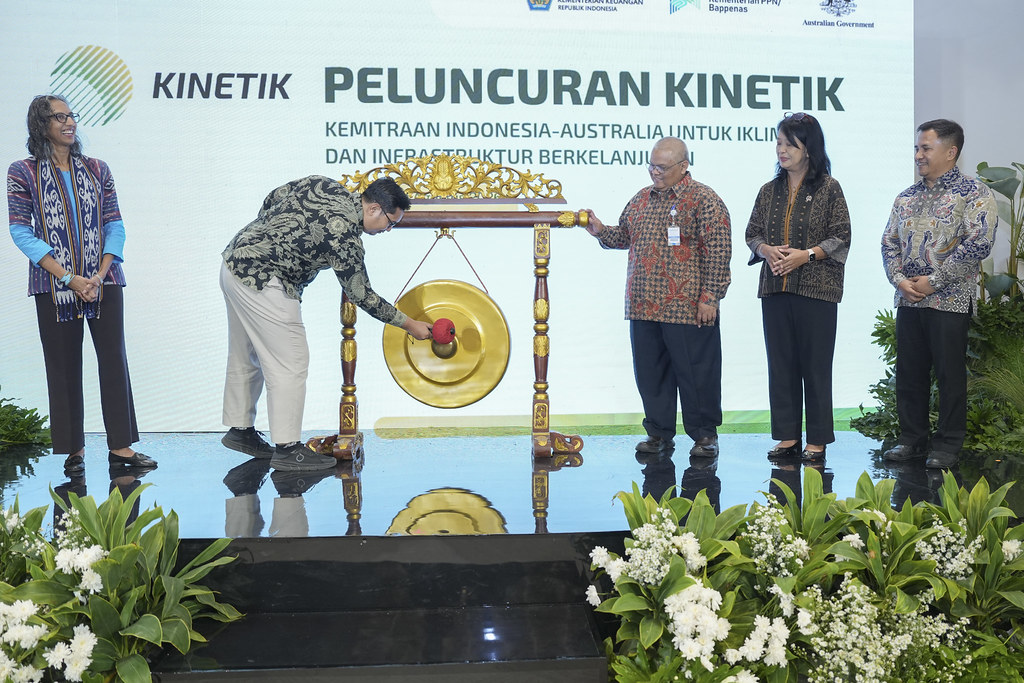
KINETIK – Indonesia and Australia’s flagship AUD 600 million climate and sustainable infrastructure partnership – was officially launched in Jakarta on 19 August.
More than 120 senior Indonesian and Australian officials attended the launch at the historic A.A. Maramis building at Indonesia’s Ministry of Finance.
Guests included the Vice Minister of Public Works, Diana Kusumastuti, Ministry of Finance Director General for Financial Sector Stability and Development, Herman Saheruddin, Bappenas Deputy Minister for Development Financing and Investment, Putut Hari Satyaka, Bappenas Deputy Minister for Food, Natural Resources and Environment, Leonardo Teguh Sambodo and Australian Embassy Deputy Ambassador Gita Kamath.

Australian Deputy Ambassador to Indonesia, Gita Kamath. Photo: JEFRI TARIGAN
In her opening remarks, Ms Kamath said KINETIK would help attract investment from governments, development banks, businesses and philanthropic partners to support Indonesia’s climate and infrastructure priorities.
She announced three investments demonstrating KINETIK’s role in mobilising capital for Indonesia’s climate and infrastructure priorities:
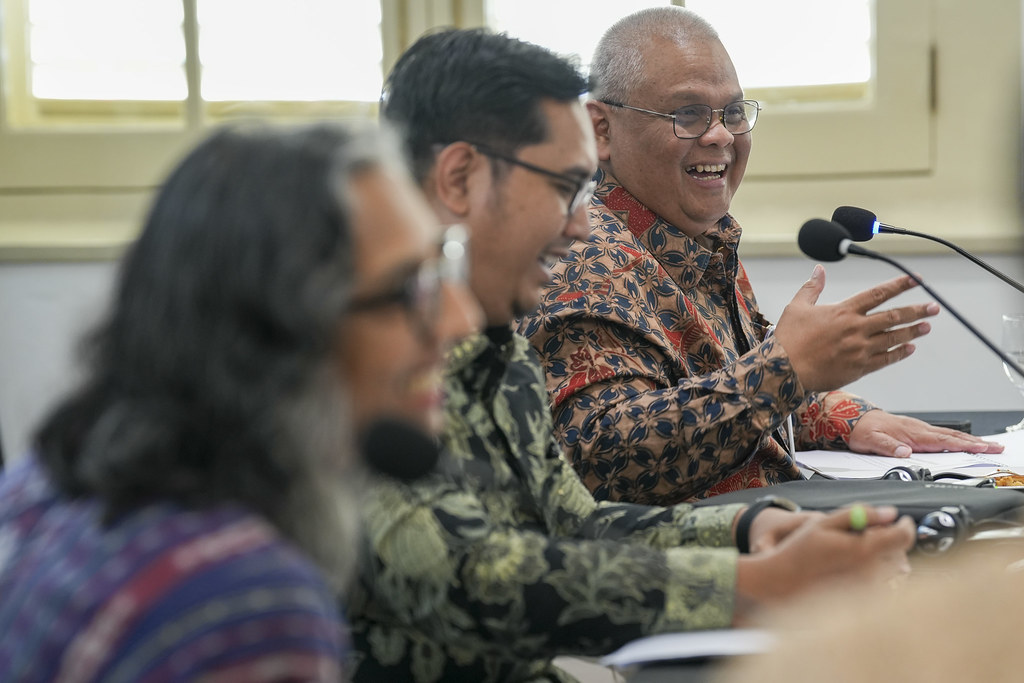
Bappenas Deputy Minister for Development Financing and Investment, Putut Hari Satyaka. Photo: JEFRI TARIGAN
Mr Putut, the Deputy Minister for Development Financing and Investment at the Ministry of National Development Planning (Bappenas), said that KINETIK comes at the right moment for Indonesia.
“Under the National Medium-Term Development Plan 2025-2029, our investment needs are projected to exceed 10,000 trillion rupiah to support our development program,” he said.
“While sustainable and climate-resilient infrastructure remains central to that agenda, state and regional budgets alone will not be sufficient. We therefore need to mobilise a much stronger and broader range of resources, including private capital, development finance, innovative financing instruments, and other forms of catalytic capital.”
Over the next decade, KINETIK will support climate resilience, innovative finance and sustainable infrastructure across energy, water, sanitation, waste management and sustainable transport.
Ms Kamath said inclusion would be at the heart of KINETIK. “Women, people with disabilities, and marginalised communities will benefit from sustainable infrastructure,” she said. “Digital innovation will also help improve project delivery.”
KINETIK builds on the work of the Indonesia–Australia Partnership for Infrastructure (KIAT), the first phase of KINETIK and the Sustainable Infrastructure Assistance Program (SIAP2), which was delivered by the Asian Development Bank.
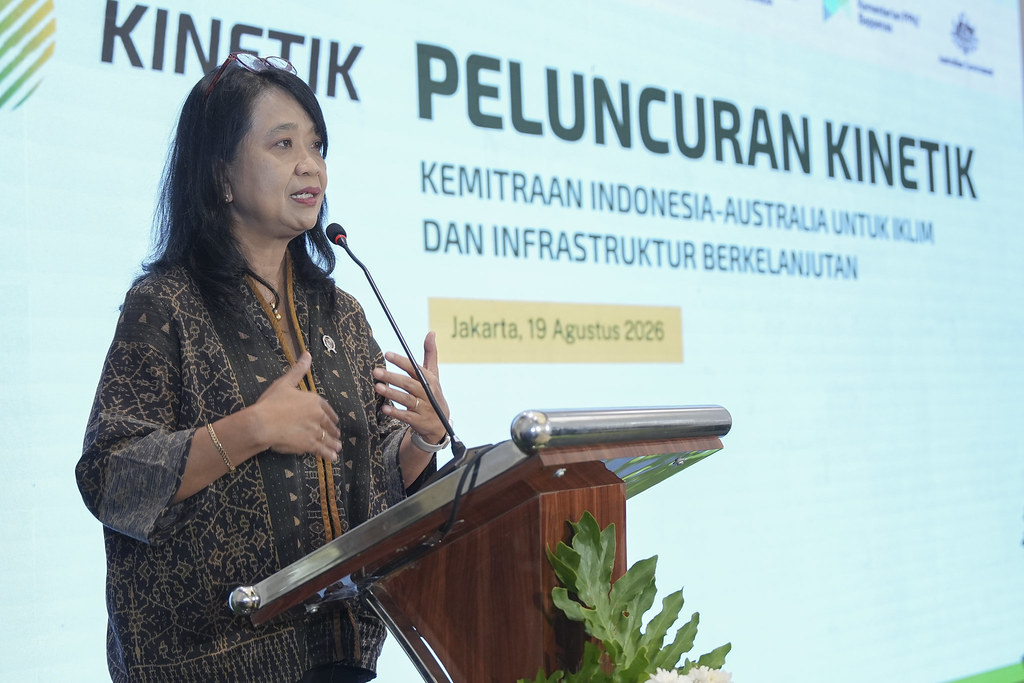
Vice Minister of Public Works, Diana Kusumastuti. Photo: JEFRI TARIGAN
“We have a great deal of experience working with Australia — a great deal — from drinking water and sanitation to road connectivity, as well as our cooperation on women’s issues,” Vice Minister of Public Works, Diana Kusumastuti, said at the launch.
Ministry of Finance Director General Herman Saheruddin officially launched KINETIK by striking a ceremonial gong.
He said Australia and Indonesia’s economic relationship had evolved from traditional bilateral trade into a deep, multi-layered institutional collaboration addressing the defining challenges of our era.
“Among these challenges, climate change and the global transition toward a low-carbon economy stand at the forefront,” Mr Herman said in the keynote speech.
The next three years would be critical for Indonesia, he said, as it accelerated low-carbon, climate-resilient and inclusive development.

Ministry of Finance Director General for Financial Sector Stability and Development, Herman Saheruddin. Photo: JEFRI TARIGAN
“This includes advancing our green and carbon economies through initiatives such as the development of a carbon unit registry and a carbon market.”
Mr Herman said Australia had proven to be an indispensable, trusted partner and strategic adviser to Indonesia.
“Through the significant commitment under the KINETIK framework, our two nations are demonstrating how a high-level diplomatic commitment can translate into green economy transition, catalyse investment, and build an inclusive clean economy ecosystem.”