
KINETIK hosts Indonesia–Australia forum on climate governance
Aug 26, 2026
6 Min
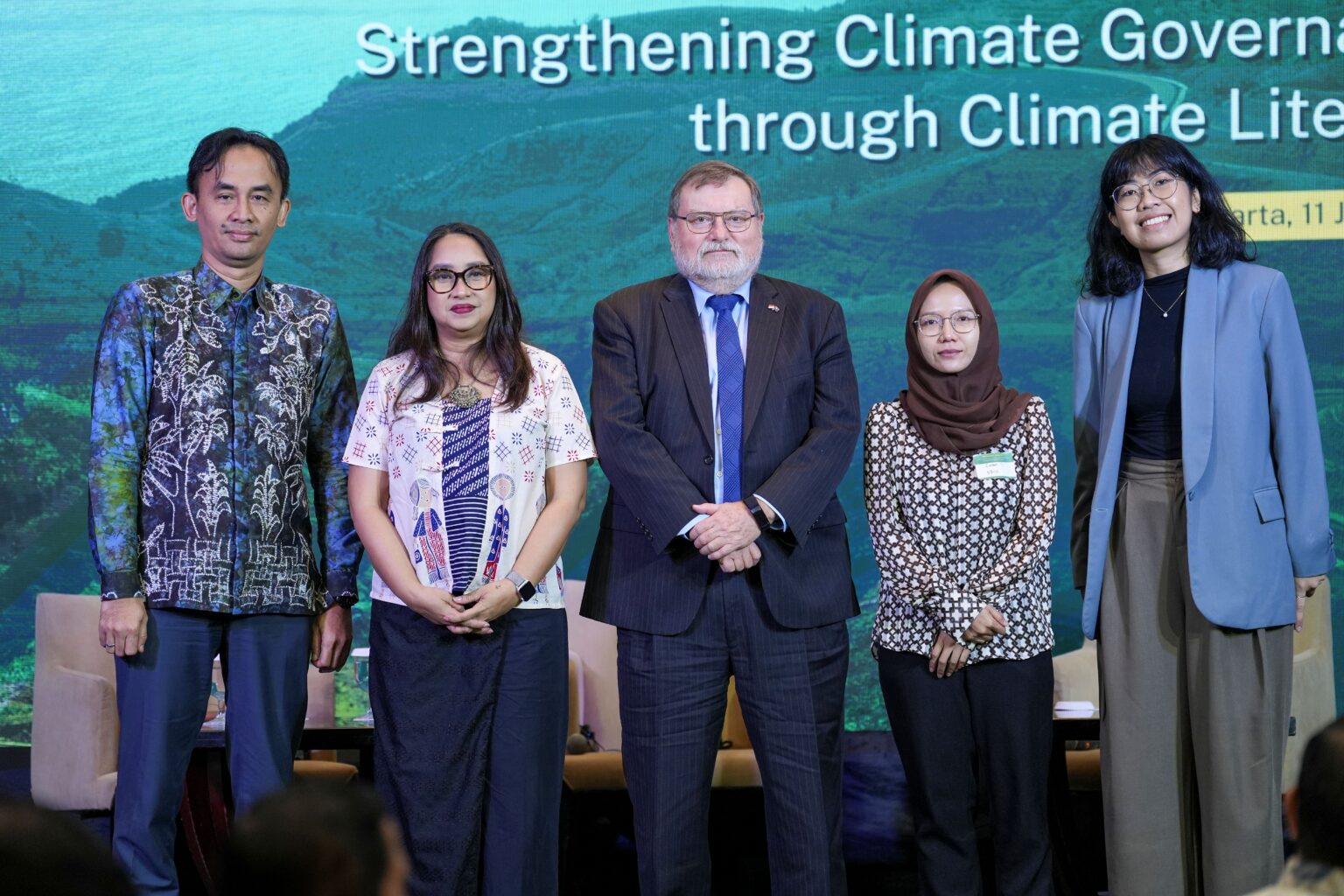
How can governments turn climate science into policy? How do they tackle climate change while supporting economic growth? And how can climate governance include First Nations knowledge and the voices of communities most affected by climate change?
These were among the questions explored at the Strengthening Climate Governance through Climate Literacy Breakfast Forum hosted by KINETIK during Australian Chief Scientist Tony Haymet’s three-day visit to Jakarta.
The forum, the first public event under the new phase of KINETIK, comes as Indonesia considers legislative reforms on climate change.
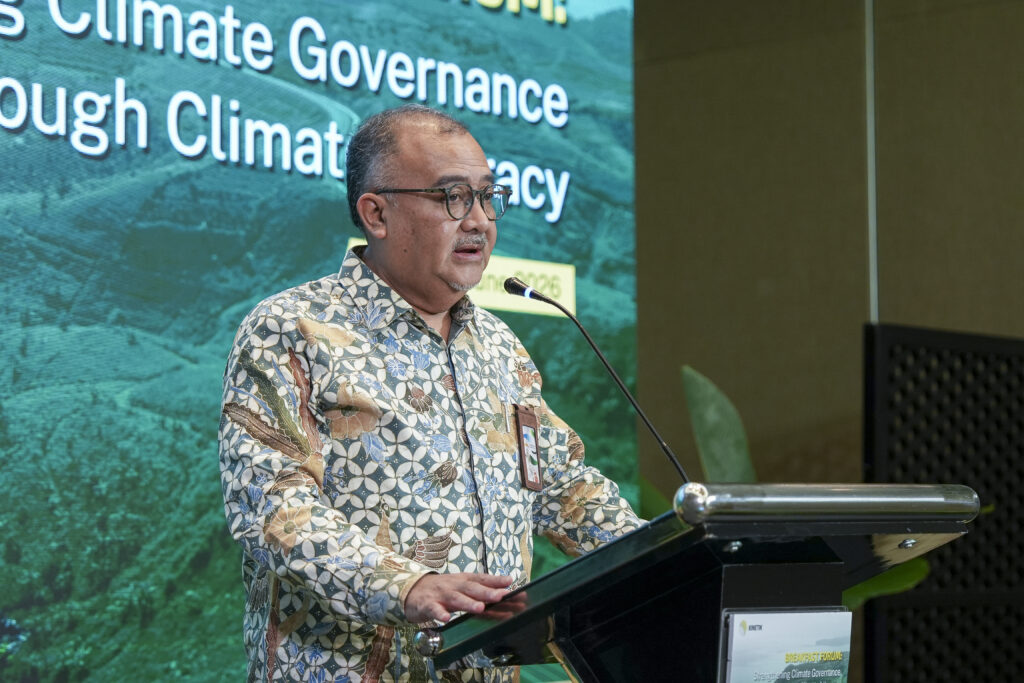
Ary Sudijanto, the Deputy Minister for Climate Change Control and Carbon Economic Value Governance. Photo: JEFRI TARIGAN
Ary Sudijanto, the Deputy Minister for Climate Change Control and Carbon Economic Value Governance at Indonesia’s Ministry of Environment, said the discussion theme was very relevant to Indonesia.
“For us, integrating governance with climate literacy is a highly appropriate and timely step, especially as Indonesia is currently drafting a Climate Change Bill,” he said in opening remarks.
Mr Ary oversees the development of climate policies, emissions monitoring systems, carbon market regulations and other measures that support Indonesia’s transition to a low-carbon economy.
Proposed body to advise on climate policy
He said the Government of Indonesia was acutely aware of the crucial role of science in decision-making.
“Therefore, within the upcoming climate bill, we are proposing specific institutional arrangements to establish an advisory body,” Mr Ary said.
“This body would comprise experts not only from the government but also from the business sector, academia and civil society, providing science-based input for climate-related decisions. This perfectly aligns with today’s event.”
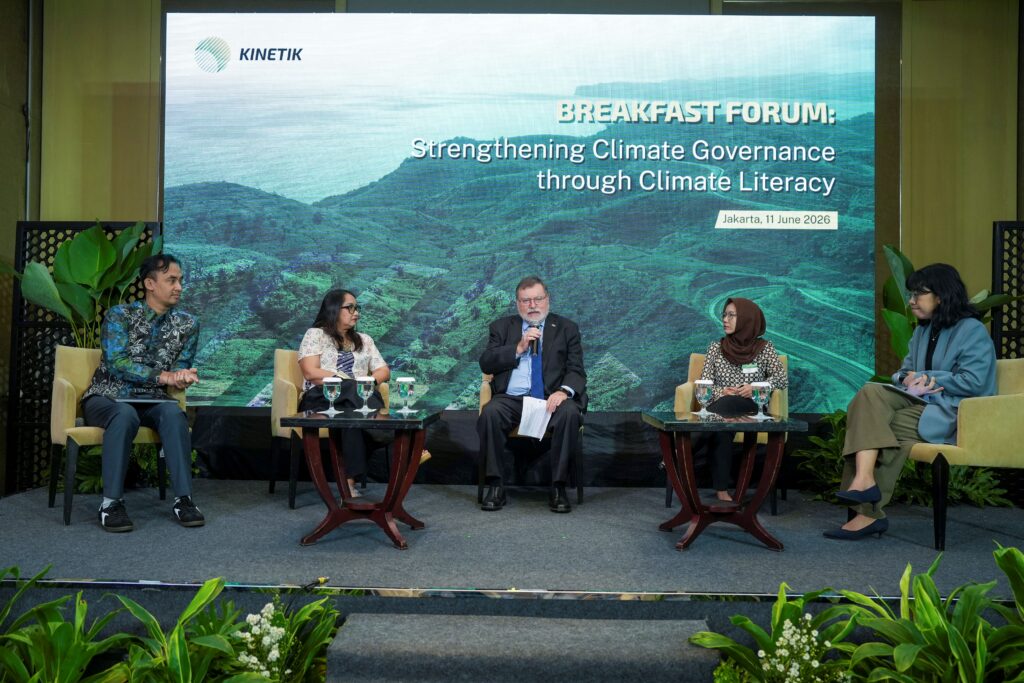
The panel discussed how governments can turn climate science into policy. Photo: JEFRI TARIGAN
The event included a panel discussion with Professor Haymet, Haryo Pambudi, the Acting Director for Governance of Carbon Economic Value in the Ministry of Environment, Intan Suci Nurhati, Senior Researcher at the National Agency for Research and Innovation and Nadia Hadad, the Executive Director of Yayasan Madani Berkelanjutan, an Indonesian civil society organisation working on environmental and climate policy.
Professor Haymet, an oceanographer and founder of a company that manufactures in-ocean robots, was appointed Australia’s Chief Scientist in January 2025.
“Fundamentally, my job is to provide advice when the government requests it,” he said.
“The government might ask me to look into climate change, misinformation and disinformation or indigenous knowledge systems – such as understanding how the original inhabitants of Australia have observed the world for the past 65,000 years.”
Building consensus on climate action
Professor Haymet is also a member of the Climate Change Authority, an independent body that last year recommended a 2035 emissions-reduction target to the Australian Government.
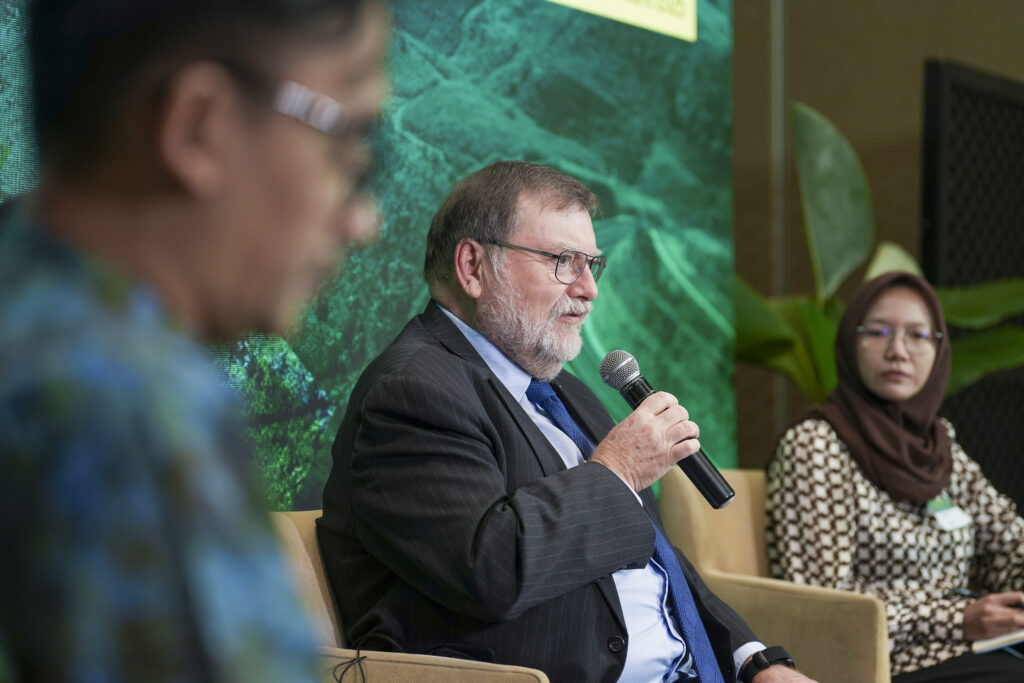
Australian Chief Scientist Professor Tony Haymet. Photo: JEFRI TARIGAN
He said the authority’s members – including business and civil society leaders – held differing views on how quickly Australia should achieve its climate targets. Professor Haymet reflected that the role of the Chair was pivotal in the group reaching consensus.
“When we consulted widely across Australia regarding our 2035 targets, we made a concerted effort to listen to all sections of the community, including groups whose voices are often marginalised in climate discussions,” he said.
Learning from First Nations Knowledge
Professor Haymet said Australia’s efforts to learn from the knowledge and lived experience of First Nations peoples were continuing, with some notable milestones.
Last November the first Prime Minister’s Prize for Aboriginal and Torres Strait Islander Knowledge Systems was awarded to Professor Michael Wear, who is restoring sea grass in Shark Bay in Western Australia.
“He is drawing upon his ancestors’ knowledge of how to care for this Indigenous Sea Country to help it recover from a devastating marine heatwave,” Professor Haymet said.
Role of civil society organisations and scientists in climate policy
Nadia Hadad said the mission of Yayasan Madani Berkelanjutan was to help the Indonesian Government achieve its climate commitments by providing evidence-based analysis.
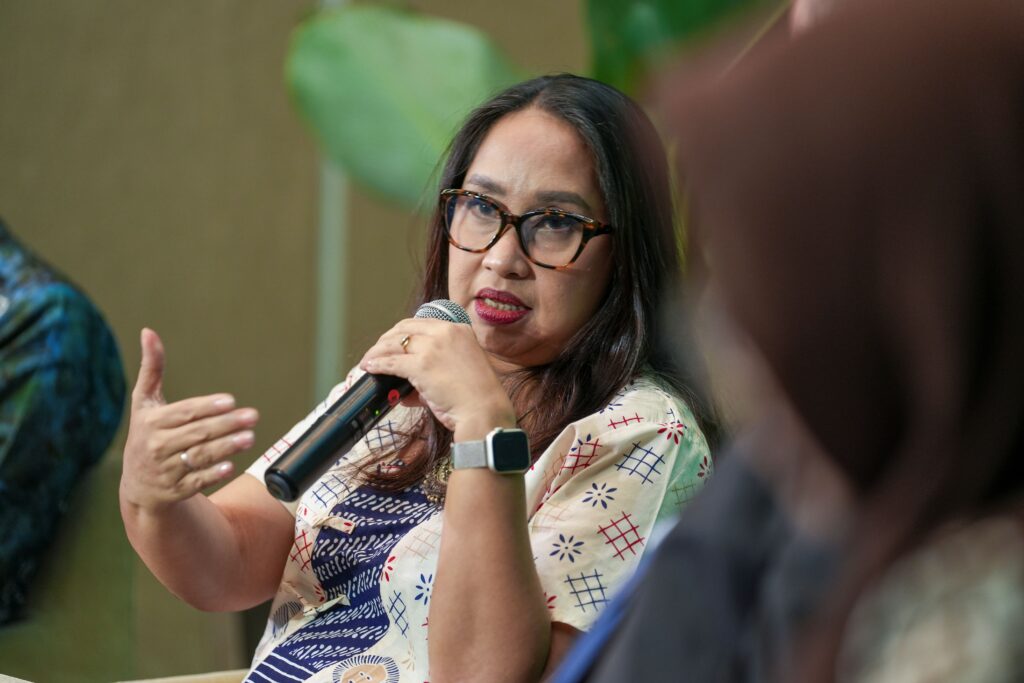
Nadia Hadad, the Executive Director of Yayasan Madani Berkelanjutan. Photo: JEFRI TARIGAN
“When Madani was first established, we realised exactly what was mentioned earlier – which aligns closely with KINETIK’s mission as well – that collaboration is essential,” she said.
“We try to act as a bridge connecting different stakeholders, especially those who do not usually communicate.”
Intan Suci Nurhati is a palaeoclimatologist, whose research examines how human-driven climate change has affected the ocean by analysing coral. She was a lead author on the UN Intergovernmental Panel on Climate Change Sixth Assessment Report.
“Technically, what I do is go scuba diving and drill into these corals to extract core samples,” she said. “I then take them to the lab, where I can tell you the exact ocean temperature during the specific month and year you were born.”
Ms Intan said she worked with scientists and climate modellers to develop the most accurate projections that modern science can provide.
“That is my role: working at the foundational scientific level so that policy makers can ultimately turn this data into actionable governance.”
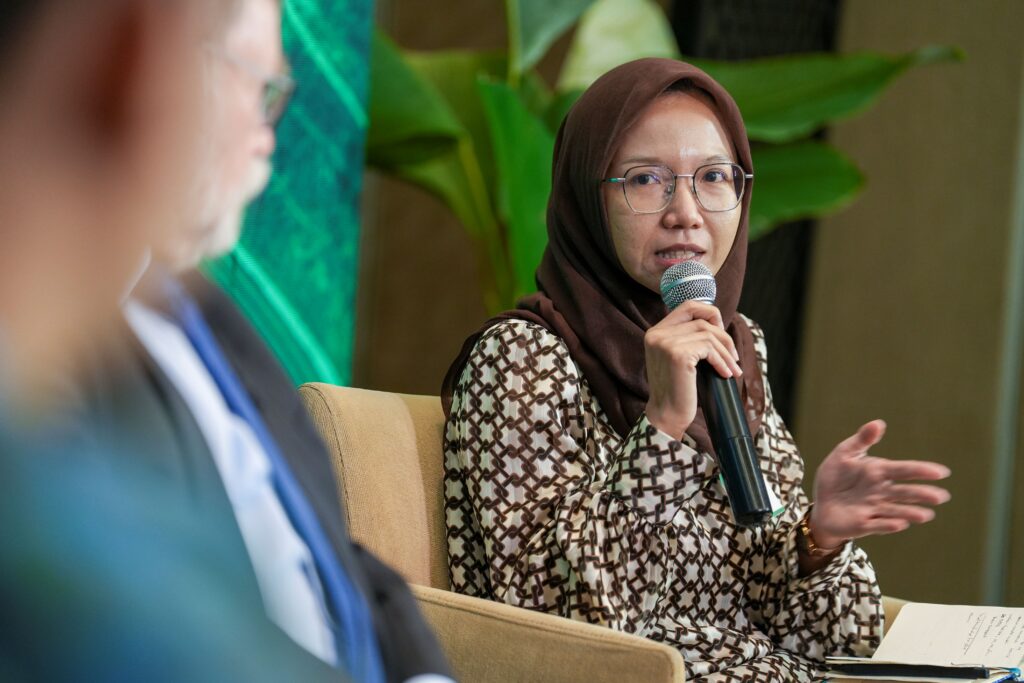
Intan Suci Nurhati, Senior Researcher at the National Agency for Research and Innovation. Photo: JEFRI TARIGAN
Haryo Pambudi said Indonesia’s Minister of Environment had directed the ministry to hold regular lectures on environmental issues, with attendance mandatory for all Echelon I and II officials.
Speakers have included marine and fisheries scientist Professor Rokhmin Dahuri and prominent economist and sustainable-development expert Professor Emil Salim.
“This is one of our new minister’s flagship programs, designed to ensure that a scientific basis truly drives our policies moving forward,” Mr Haryo said.
“Furthermore, it is a major policy of our government that discussions surrounding the environment and climate change do not occur in isolation, but also actively promote the creation of green jobs.”
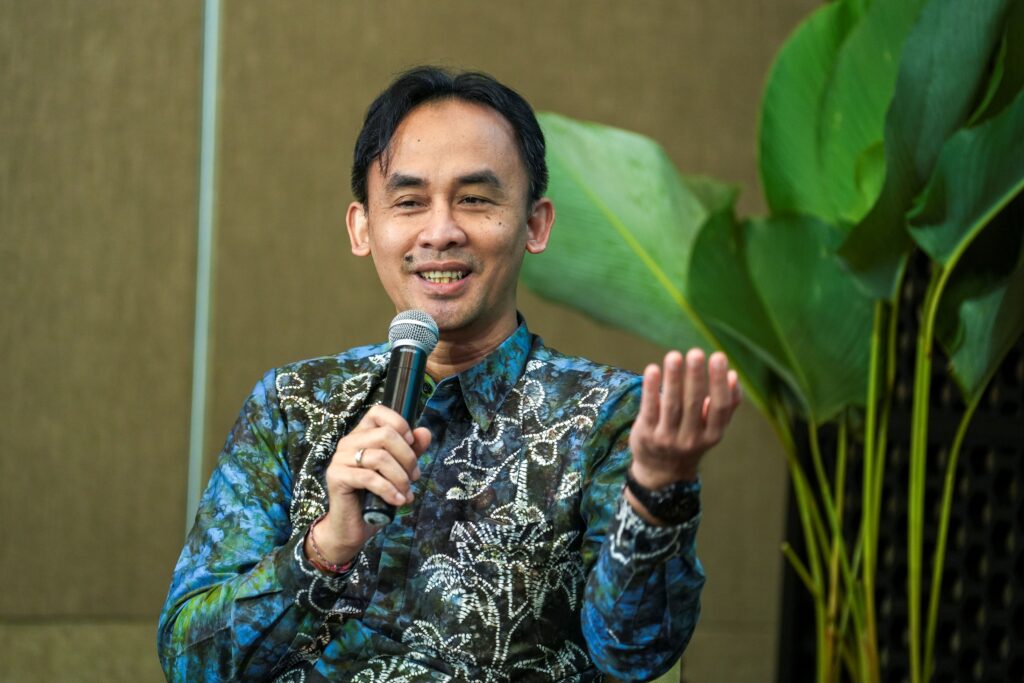
Haryo Pambudi, the Acting Director for Governance of Carbon Economic Value in the Ministry of Environment. Photo: JEFRI TARIGAN
Government-to-government partnerships
Minister-Counsellor Joanathan Gilbert, the Head of Economic, Investment and Infrastructure at the Australian Embassy in Indonesia, said KINETIK placed a strong emphasis on government-to-government partnerships and collaboration between institutions.
“Supporting stronger links between scientific expertise and policymaking is an area where our two countries have so much to learn from each other.”