Beyond jargon
Dec 04, 2025
5 Min
In a country racing to meet its clean energy commitments, many of Indonesia’s most compelling climate and innovation stories are not found in conference halls or government press releases but in villages, landfills, workshops and coastal communities.
Yet these stories rarely make it into the mainstream press.
This is a gap the KINETIK NEX Entrepreneurs’ Program is now trying to bridge.
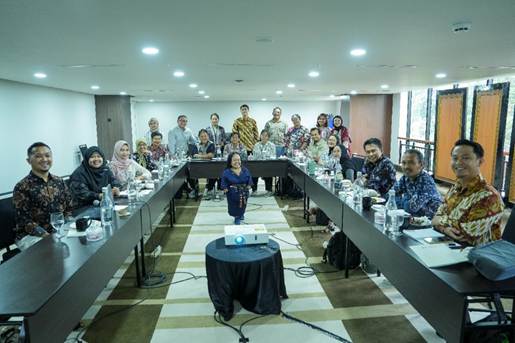
The cohort – selected from more than 100 applicants – included reporters from major national publications as well as correspondents from Sulawesi, Maluku, Kalimantan, and Sumatra.
The goal was to equip journalists with the tools, knowledge and context needed to tell inclusive, solutions-focused stories about Indonesia’s energy transition.
Why clean energy stories often go untold
For many journalists, clean energy remains a technically dense, jargon-heavy topic.
Most are more accustomed to covering environmental disasters, floods or heatwaves than community-led solar microgrids or the struggles of a small startup trying to survive.
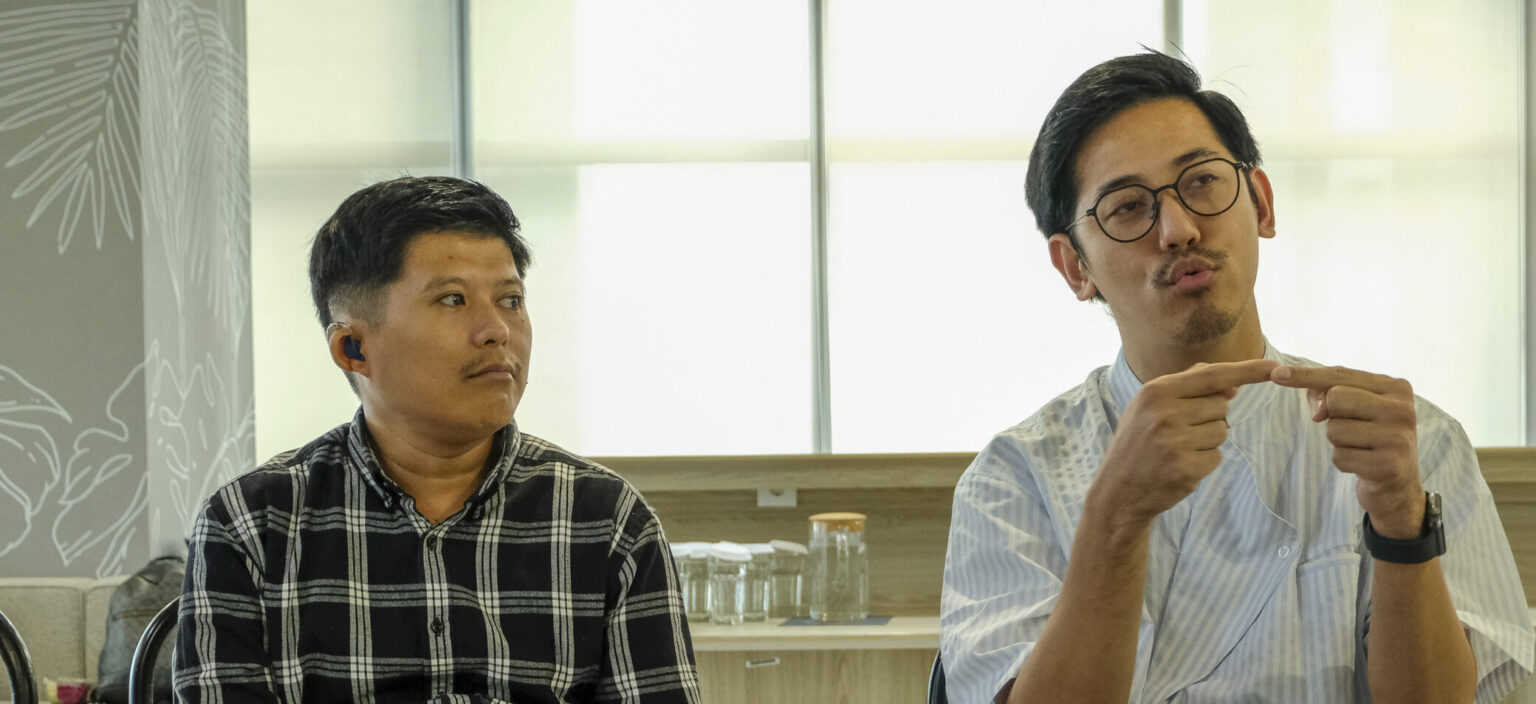
Syifa Maulida Wijdan from Magdalene, an Indonesian feminist online magazine, said the topic can feel overwhelming.
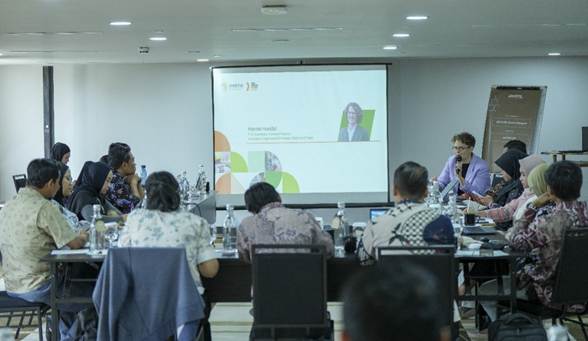
“There are so many terms we’re not familiar with,” she said. “We come from different backgrounds, so concepts like carbon accounting or energy access feel very new. And because much of it is discussed in English, it can be another barrier.”
Syifa said the training helped her connect abstract terminology to lived experience. “Once you understand the people behind the issue,” she said, “the reporting becomes clearer. It becomes real.”
Tempo Kendari correspondent Rosniawanti Fikry Tahir recalled reporting on a community in Kendari, south-west Sulawesi, who used methane gas from a local landfill to fuel simple household stoves.
“It was basic, but it worked,” she said. “Then it stopped because when their equipment broke, there was no support. So many community-driven solutions just disappear.”

It’s a pattern also seen by Mongabay journalist Rendy Tisna from Banjarmasin.
“These stories are complex, and they need to be told.”
A workshop designed for the realities of Indonesian journalism
Unlike typical training programs heavy on theory, this one immersed journalists directly into the tensions and trade-offs of Indonesia’s energy transition.
1. Understanding clean energy and climate startups
Delivered by Dhana Kencana, a senior journalist from IDN Times, the session cut through jargon and pushed journalists to focus on clarity and context.
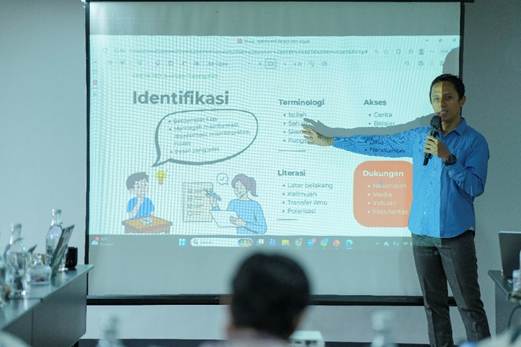
“Solution journalism demands high rigour,” Dhana said. “It offers hope, real hope, based on evidence, not naïve optimism. And it shifts the public conversation from fear to possibility.”
He urged participants to look beyond corporate press releases and explore why innovations often fail to grow and why community projects collapse.
2. The role of startups in driving innovation
Marilyn Lestari, founder of Indonesian electric mobility startup Leastric, used her own journey from a shock electricity bill to building an energy-data startup to illustrate what journalists often miss.
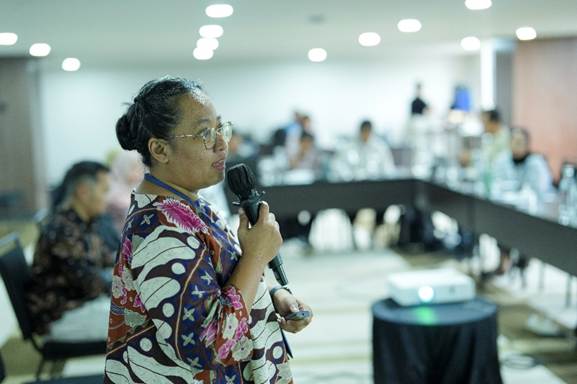
“Technology is only half the story,” she said. “What matters is why the solution was created, who it helps, and the struggles behind it. That’s what builds public understanding, trust and policy change.”
She challenged journalists to uncover personal narratives, including the setbacks founders rarely share publicly.
3. Reporting through an inclusion lens
The session by Pujiaryati Anggiasari, KINETIK’s Gender Equality Disability and Social Inclusion (GEDSI) Partnership Manager, pushed journalists to recognise who is missing from energy stories.
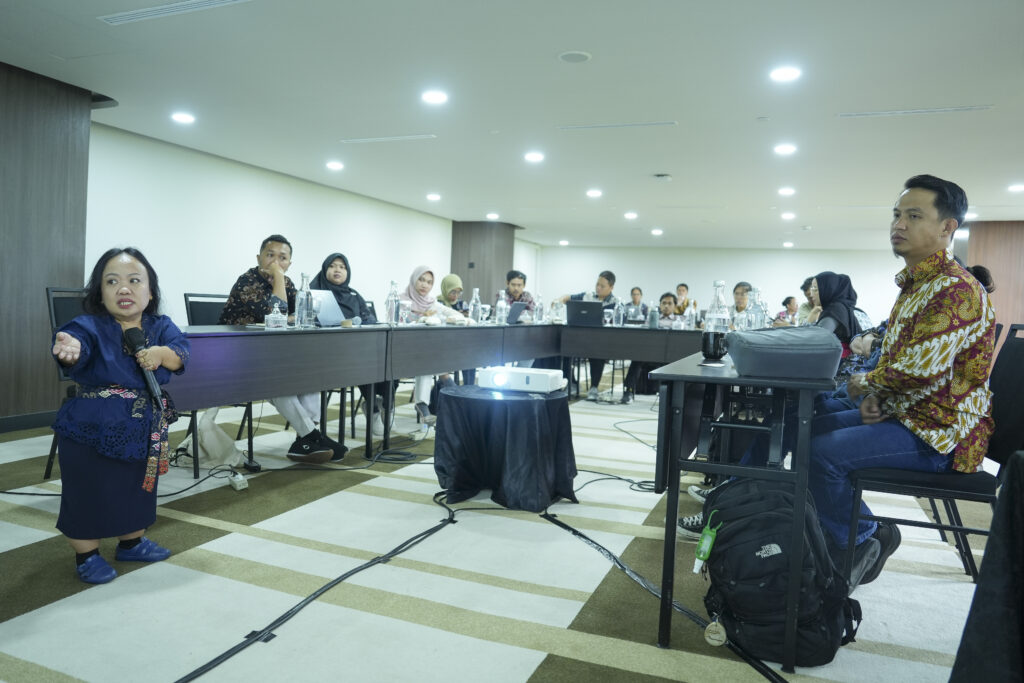
“Only about 10–15 per cent of renewable energy coverage in Indonesia includes women or marginalised voices,” she said. “Without inclusive reporting, policy debates become skewed and communities stay invisible.”
She gave participants practical tools for identifying bias, using inclusive language and understanding how energy transitions can deepen inequality.
4. Multimedia storytelling for the digital era
Longtime cameraman for Al Jazeera, Adi Guno, took the journalists into the world of phone-based field reporting.
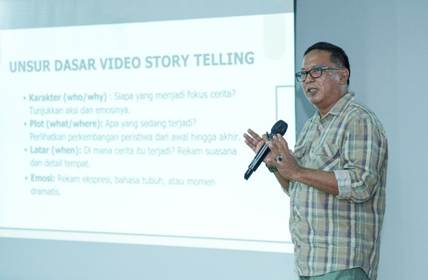
“Video isn’t just about showing images. It’s about telling a story,” Adi said. “A good close-up can say more than a thousand words.”
Journalists learned everything from framing and lighting to capturing clean audio and spent the afternoon practising A-roll (main footage) and B-roll (supporting footage) sequences.
A shift in perspective
The sessions taught that clean energy reporting is not simply about technology or policy. It is about the choices people make, the power structures behind them, and the communities left at the margins.
The experiences shared by participants revealed a concern that many promising innovations had been “silenced”, whether by policy, politics, or a lack of long-term support.
“People have been innovating for years, long before clean energy became a trend,” Rosniawati said. “But their stories never reached the surface.”
Building a new generation of climate reporters
By the end of the day, participants left with story ideas ranging from deserted micro-hydro plants to women being disproportionately responsible for accessing water.
The KINETIK NEX Entrepreneurs’ program also launched a competition for journalists who participated in the training.
Over the coming weeks, the journalists will travel to meet the startups in the KINETIK NEX Entrepreneurs’ Program, visiting workshops, homes, coastal villages, and community hubs where these climate innovations are being tested and refined.
The field visits will give them an inside look at how clean-energy ideas are developed, the challenges founders face, and the tangible impact these solutions create in everyday life.
The five best stories will each receive a prize of IDR 5 million.