Turning banana waste into income and inclusion
May 20, 2026
6 Min
As a person with a disability, Sugeng Paijo – commonly known as Jojo – understands too well that the opportunities for people with disabilities are often far less than for those without disabilities.
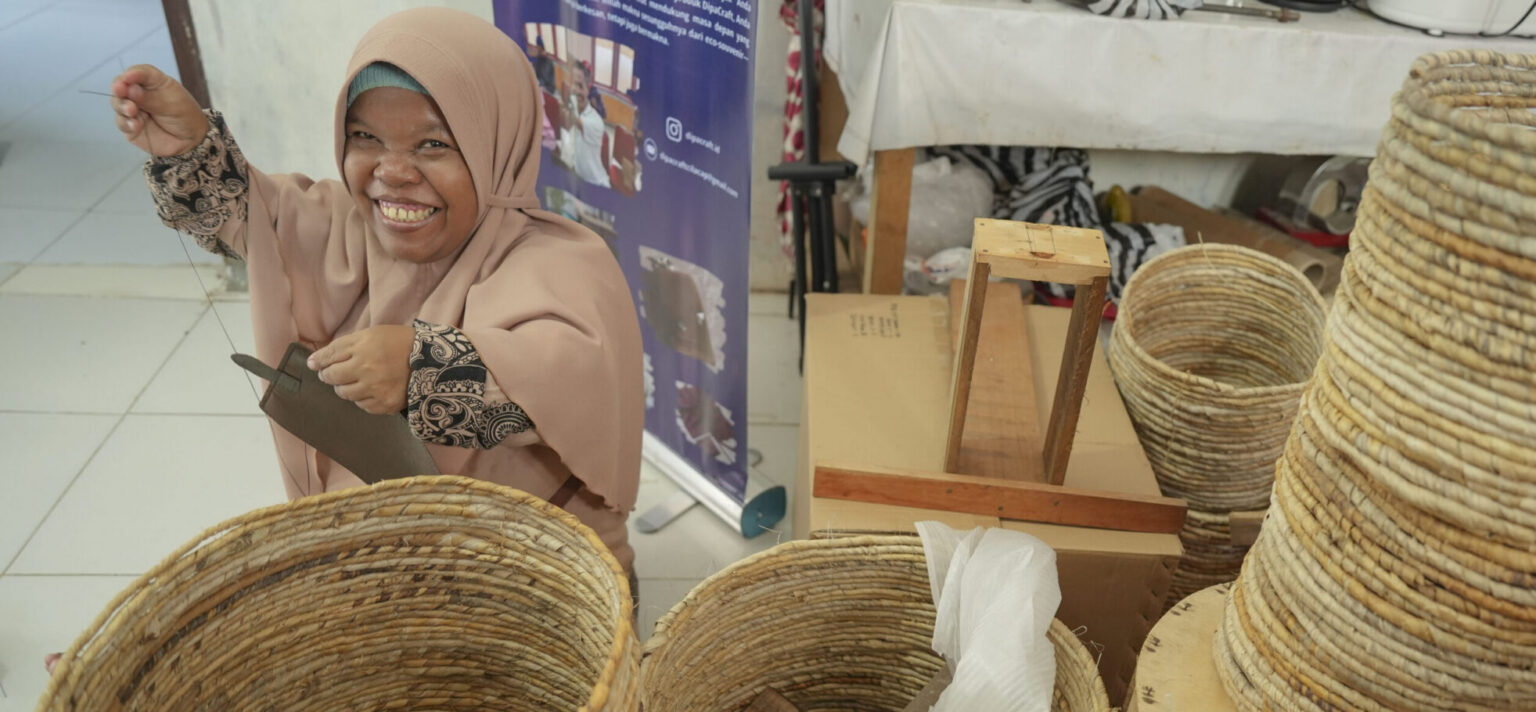
When we visited his workshop in Cilacap, Central Java, we met a group of workers including Jojo and his wife producing vegan leather from banana trunks – agricultural waste that would otherwise be discarded, burned, or left to rot.
The group included a little person carefully stitching notebook covers by hand, a mother in a wheelchair assembling wallets, a deaf woman focused on detailed sewing patterns and a driver with amputated hands who helps transport products to customers and delivery stations.
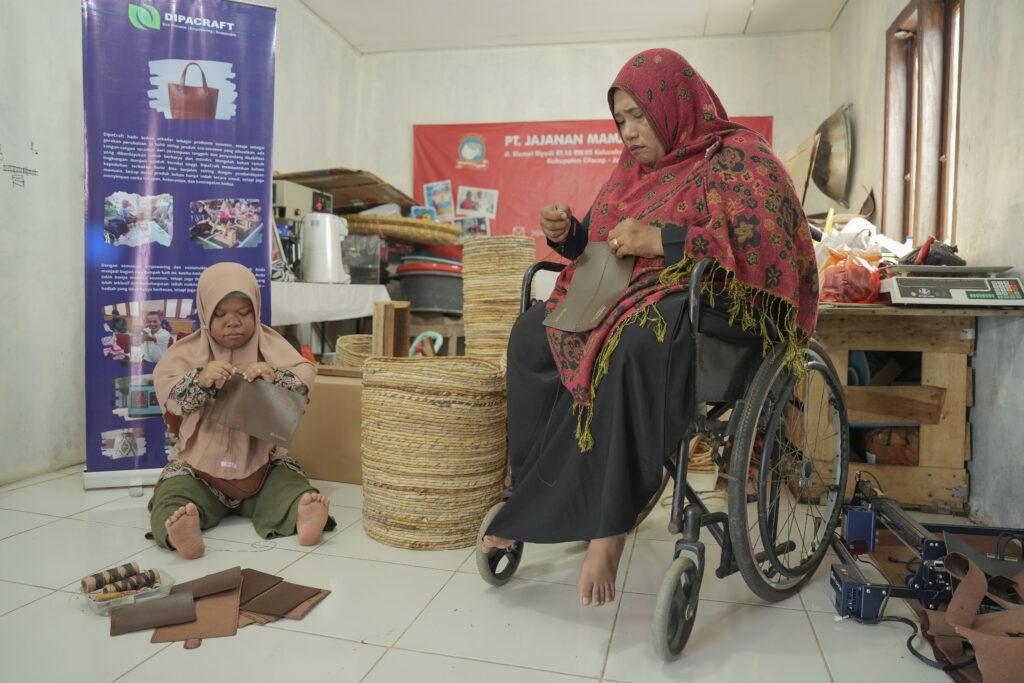
Dipacraft produces vegan leather products from banana waste. Photo: JEFRI TARIGAN
“For years, I mostly stayed at home running my small sembako (staple household goods) kiosk,” said Ina Mariana, a wheelchair user from Cilacap who joined DipaCraft.
“Here, I can meet other people who have similar challenges. We can learn together, work together, and encourage each other. It gives me happiness and hope because now I feel like I can still be productive and part of something meaningful.”
DipaCraft is one of 15 startups who received business incubation from LESTARI (Leveraging Sustainable Access for Resilient Inclusion), an inclusive capacity-building initiative funded by KINETIK.
The program includes evidence-based research, structured mentoring, business incubation and green finance training and matchmaking with investors, financial institutions and partners.
DipaCraft produces wallets, notebook covers, corporate souvenirs, name tags,and bags from vegan leather, as well as rattan-style laundry baskets, tissue boxes and storage containers woven from banana fibre. Although both materials come from banana trunks, locally known as gedebog, they are made through different processes.
For the vegan leather, fresh banana trunks are chopped, blended into pulp, mixed with natural compounds, and dried into flexible leather-like sheets. Meanwhile, the woven crafts are made from layers of banana trunk that are peeled, sliced into thin sheets, sun-dried, and spun into fibres before being woven by hand into baskets and other household products.
What was once agricultural waste is transformed into products with both environmental and economic value.
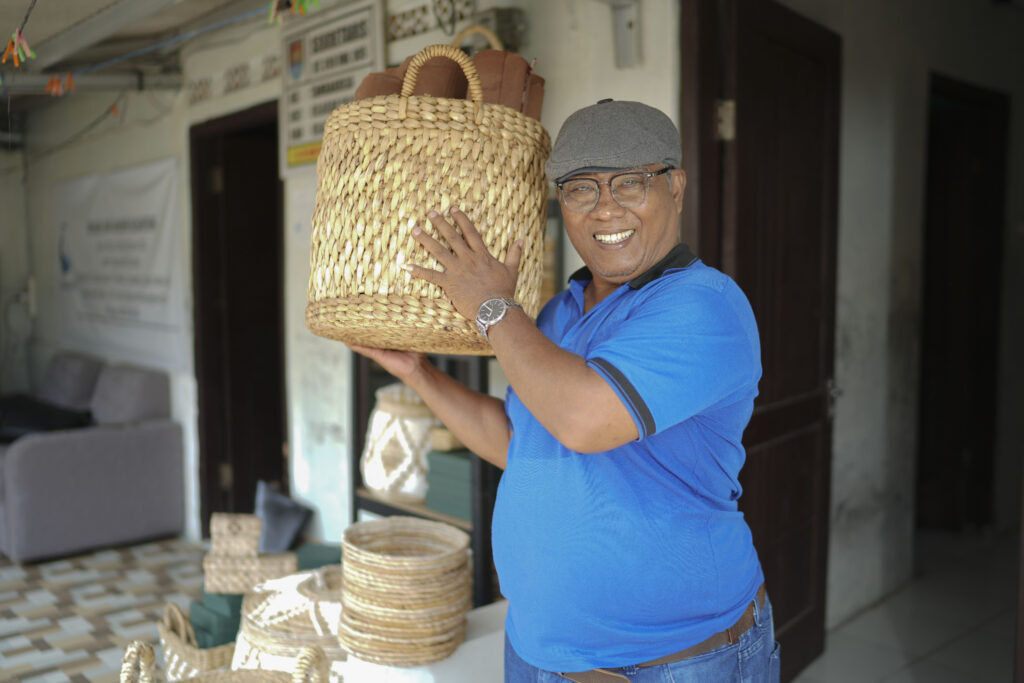
Jojo holds sheets of vegan leather made from processed banana trunks at his workshop in Cilacap, Central Java. Photo: JEFRI TARIGAN
“I myself am a person with a disability, and I also have a disability community,” Jojo says. “From there, I could feel and see that there are still many people with disabilities who are being overlooked.”
What began as simple conversations about banana waste and unemployment eventually evolved into a social enterprise built around inclusion, environmental sustainability and dignity.
Jojo and his team experimented through trial and error – learning from YouTube videos, asking around and refining their own formula until they successfully created vegan leather sheets from banana trunks.
Today, DipaCraft works with around 15 active partners, most of whom are women and people with disabilities. Rather than calling them employees, Jojo calls them “partners.”
Although green finance frameworks and sustainability policies are increasingly common in Indonesia, implementation remains uneven – especially for small-scale green enterprises led by women and persons with disabilities.
Many face overlapping challenges, including low financial literacy, weak administrative readiness, limited knowledge about sustainable business practices, lack of collateral, and persistent stigma from financial institutions and wider society.
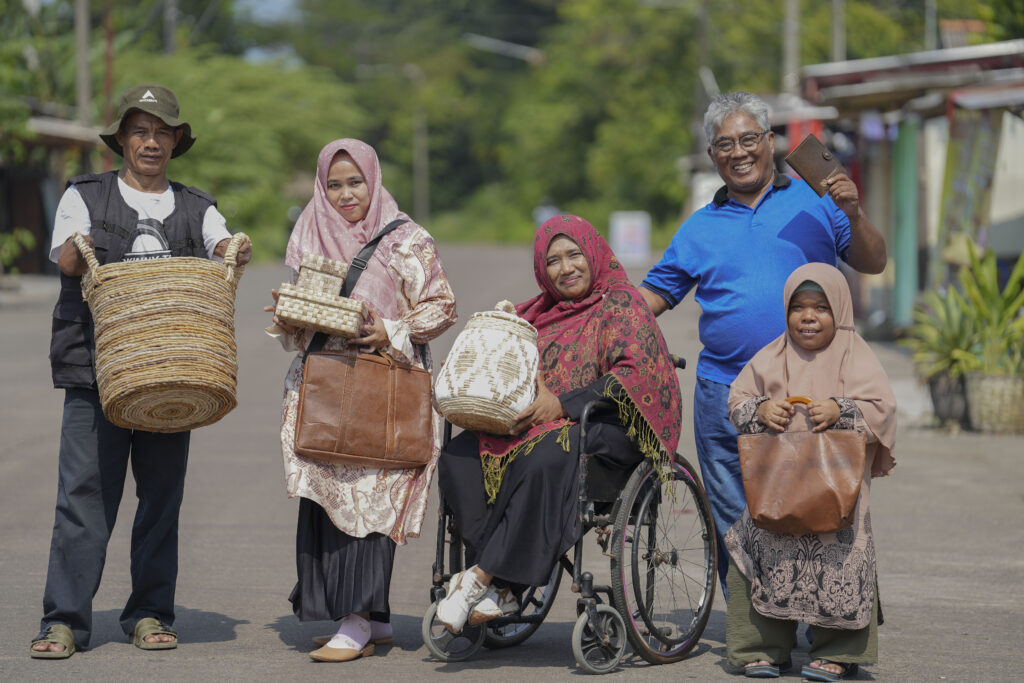
DipaCraft works with around 15 partners, most of whom are women and people with disabilities. Photo: JEFRI TARIGAN
“Funding has always been the biggest challenge,” Jojo said. “We didn’t even dare to seek external capital because we didn’t have collateral.”
Like many disability-inclusive businesses, DipaCraft initially relied entirely on self-financing and community support. Even when government-backed financing schemes existed, Jojo said they lacked confidence to apply.
This challenge is precisely what the LESTARI program was designed to address.
Ranitya Nurlita, the founder of Wastehub and coordinator of the LESTARI Consortium, said many women and people with disabilities have become accustomed to charity-based assistance rather than long-term opportunities.
“They are used to receiving assistance,” she said. “Administration becomes secondary, the focus is just production. Whereas administration is very important, especially if they want to get loans and so on.”
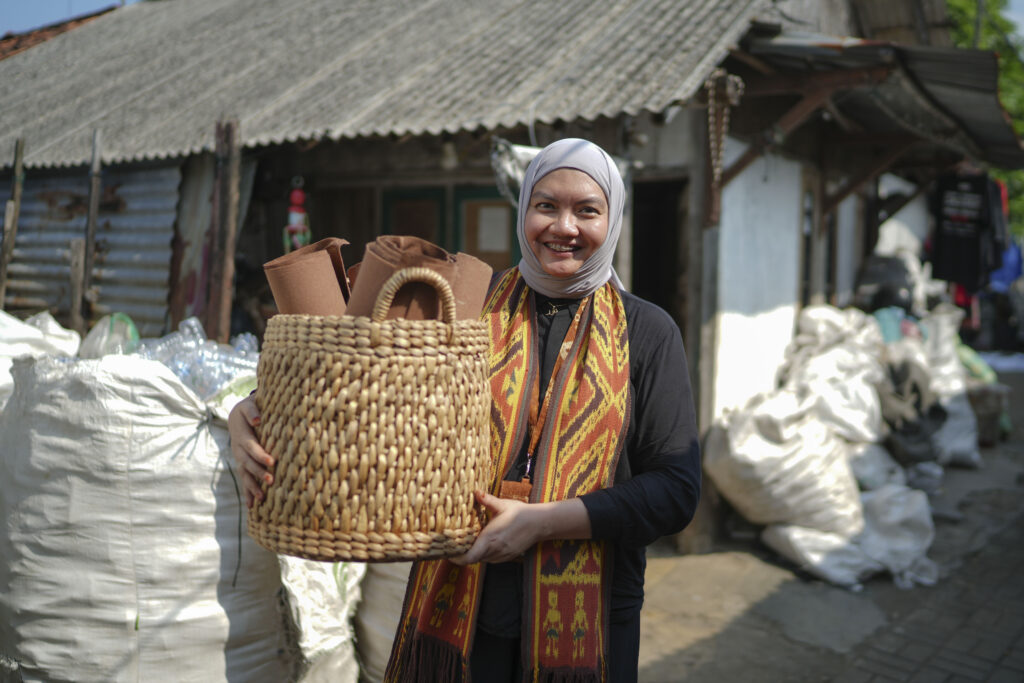
Ranitya Nurlita, Coordinator of the LESTARI Consortium. Photo: JEFRI TARIGAN
The LESTARI consortium, consisting of Wastehub, Difalink, Jepara Green Generation, and Flores Bumi Lestari attempts to bridge this gap by combining sustainability, entrepreneurship, and disability inclusion.
Participants learned about Environmental Social and Governance (ESG) principles, sustainable business models, branding, legal compliance, financial record keeping and pitching to investors. They were also connected to mentors who helped expand their market access.
For DipaCraft, one important lesson was market positioning.
“Our product is very niche,” Jojo said. “So, the mentors advised us to narrow down the market and position ourselves as eco-friendly corporate gifts and souvenirs.”
That shift helped DipaCraft secure growing exposure and clients, including corporations such as Pertamina, Baznas, CIMB, and PNM.
“Previously (many participants) might feel their products were not good enough,” Lita said. “But actually, the products are very good, and we want them to be confident as business owners.”
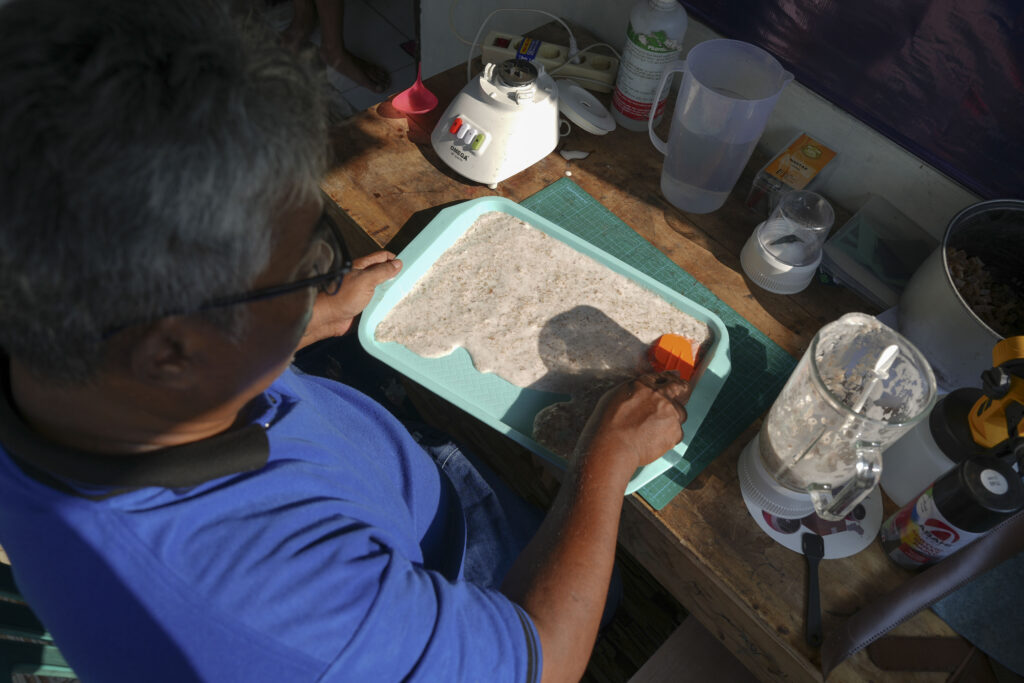
Fresh banana trunks are chopped, blended into pulp, mixed with natural compounds and dried into flexible leather-like sheets. Photo: JEFRI TARIGAN
Some DipaCraft partners work from home while managing small food stalls. Others sew products while taking care of their families. DipaCraft provides raw materials, tools, thread, and prepared patterns, allowing workers to participate without having to invest their own capital.
The production process itself remains largely manual and community-based. Banana trunks are collected from surrounding villages before being processed by DipaCraft’s workers and partners into vegan leather sheets or woven banana fibres. Much of the crafting, weaving, drying, and finishing is done by hand – creating flexible income opportunities for women and people with disabilities who can work from home or within the community workshop.
Dipacraft participated in the ‘Living the Impact: LESTARI Demo Day’ held on 25 April 2026 in Bali, where 15 selected green Micro, Small and Medium-Sized Enterprises showcased their businesses to investors, corporations, NGOs, financial institutions and policymakers.
For KINETIK and the LESTARI consortium, these enterprises are examples of how inclusive green economies can actually work at the local level.
There is still a long way to go.
Access to financing remains difficult. Certification and scaling remain major hurdles. Many disability-inclusive businesses still operate informally and continue to face systemic discrimination.
But inside a modest workshop in Cilacap, surrounded by sheets of banana leather drying under the sun, the future already feels a little more possible.