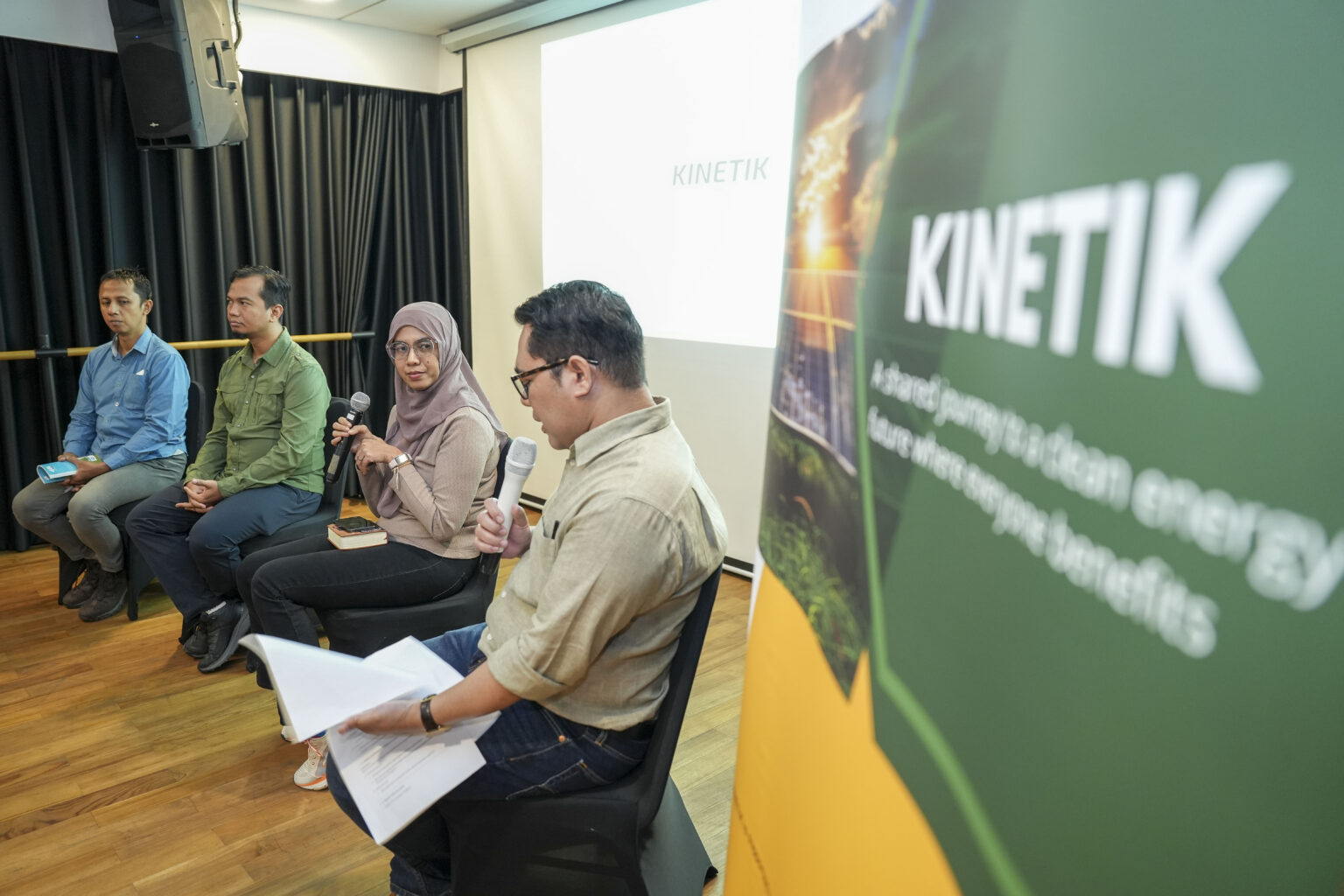
A panel that explored the role of solutions journalism in reporting on the energy transition was hosted by KINETIK at Pesta Media AJI Jakarta 2026.
Solutions journalism is a form of reporting that focuses on how people are trying to solve challenges and whether these efforts are effective.
The panel – Stories of Change: How Solutions Journalism Is Bringing Indonesia’s Energy Transition to Life – featured Dhana Kencana and Arifin Alamudi from IDN Times, and Meidella Syahni from Mongabay.
KINETIK communications manager Amron Hamdi, who moderated the panel, said a successful transition to a low-carbon economy required public understanding of how renewable energy solutions work on the ground.
“Through journalism, we can open up new perspectives, strengthen public understanding, and encourage more inclusive change,” Amron said.
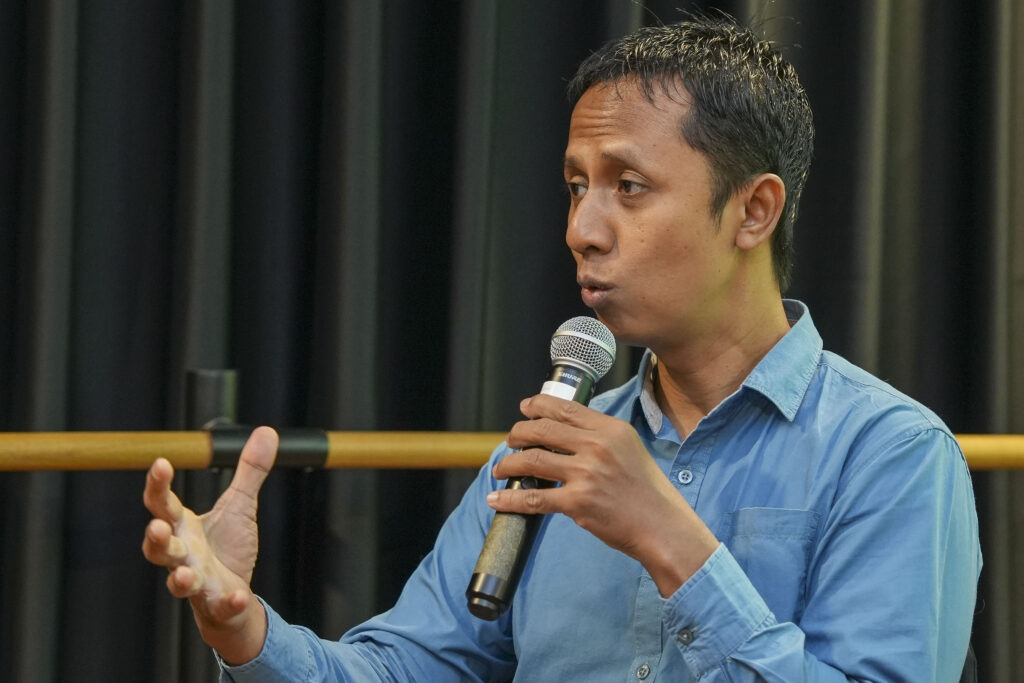
Meidella Syahni, left, from Mongabay. Photo: JEFRI TARIGAN
Meidella Syahni, who has been reporting on environmental and human rights issues for Mongabay since 2017, said she believed people experienced climate fatigue if they were only exposed to terrible news about the climate crisis.
She said there was a global trend in journalism to address this by evidence-based reporting on what can be done to tackle social and environmental problems.
“There must be something we can do, there must be hope,” she said. “Yes we are in a climate crisis – not just climate change – but we can still do a lot to tackle global warming.”
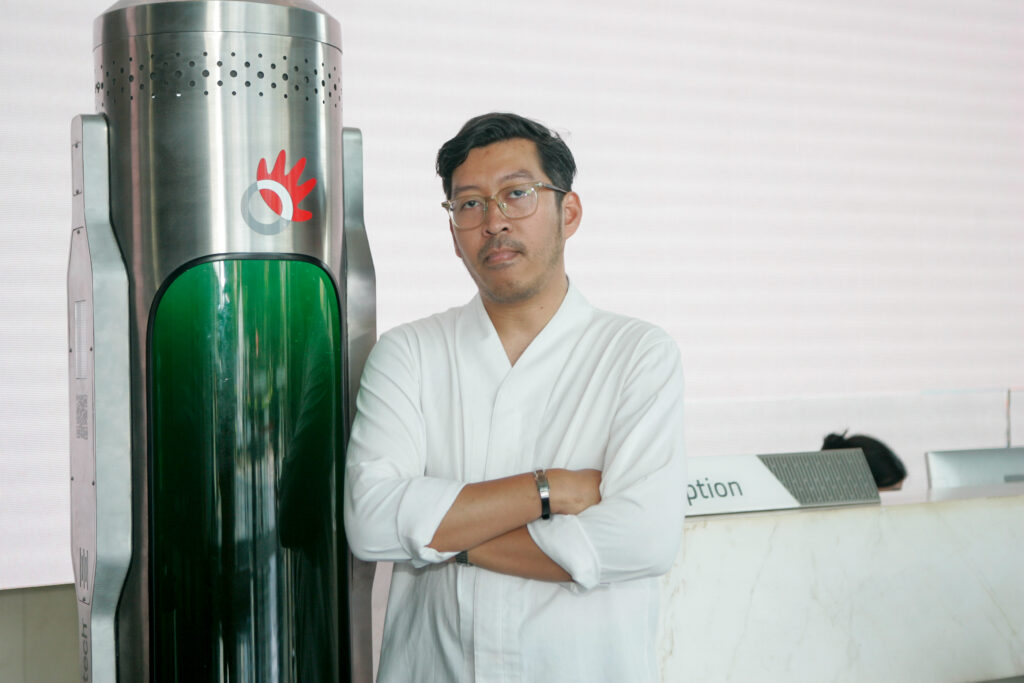
Della won a KINETIK NEX Media Award for her story Microalgae, the carbon catcher and future food source, which profiled Algatech Nusantara, one of the startups that was part of the KINETIK NEX Entrepreneurs’ Program.
Algatech is experimenting with growing microalgae – microscopic aquatic plants – to capture carbon, which Della described as “a tree-in-a-tube if you can imagine”.
Algatech’s “tree-in-a-tube” uses microalgae to capture carbon. Photo: MOCHAMAD TOPANDI
“Interestingly this microalgae research has been around since the 80s and has great potential; it can be used for fuel, food (because it is high in protein) and decarbonisation,” she said.
However, her story says that to date, Indonesia does not yet have a standardised methodology to calculate and recognise carbon absorption based on microalgae.
“Without recognised standards, claims of carbon absorption are vulnerable to scrutiny and risk being dismissed as greenwashing,” the story says.
Della said it was important that solutions journalism does not overclaim and highlights the challenges and limitations of different approaches to tackle climate change.
“Because I think renewable energy is not always clean – we still have to be critical,” she said.
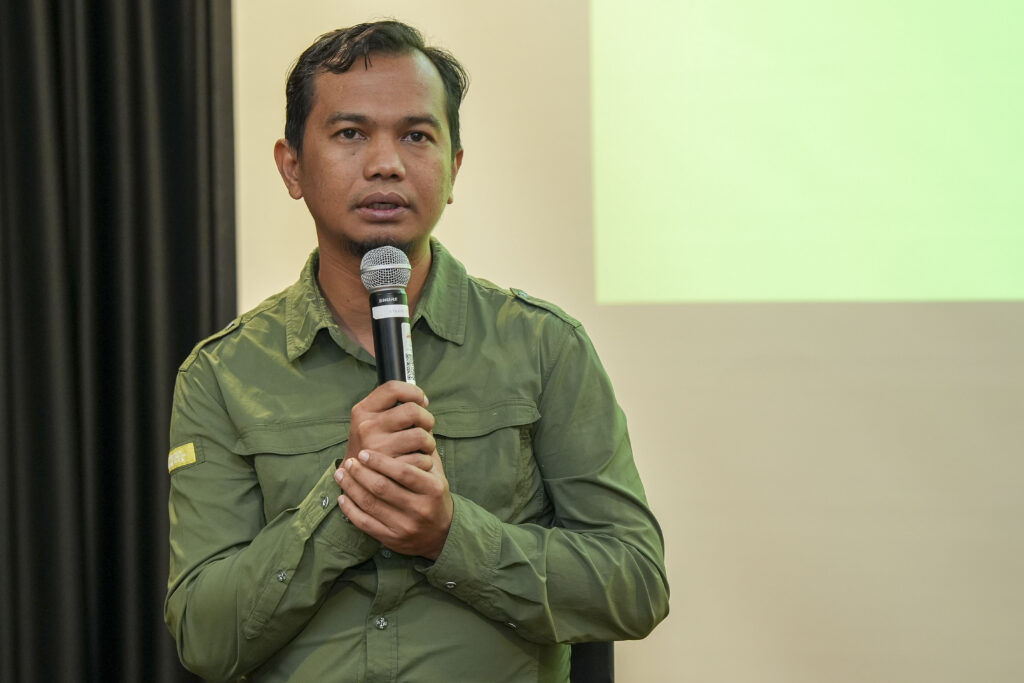
Arifin Alamudi from IDN Times in Sumatra. Photo: JEFRI TARIGAN
Arifin Alamudi from IDN Times in Sumatra said there was an old adage in journalism that bad news was good news.
However, he said the media was transforming and news sites now not only chased the number of people who clicked on a news story but how long they stayed on the website.
“After the disaster, what should we present to the readers? In the end we have to do something that is a solution … and educational.”
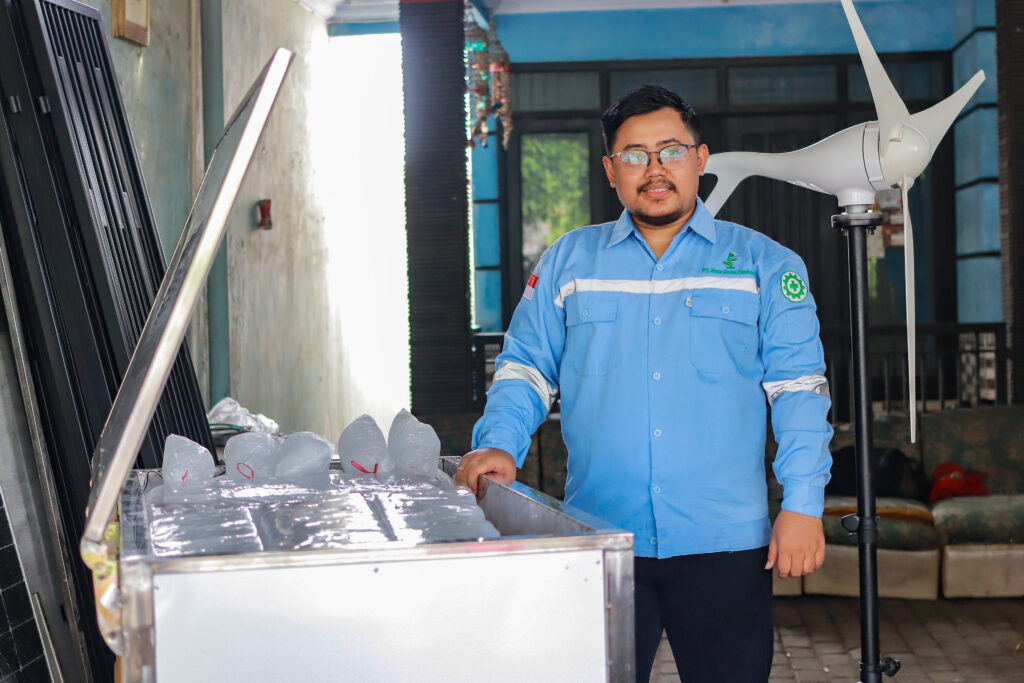
Nusacube supplies fishing communities in remote parts of eastern Indonesia with ice blocks that are produced using renewable energy.
Nusacube supplies fishing communities in remote parts of eastern Indonesia with ice blocks produced using renewable energy. Photo: JEFRI TARIGAN
This keeps fish fresher, raises selling prices and reduces spoilage, boosting the incomes of fishers.
“That’s what makes this story interesting, how an energy solution can simultaneously improve the welfare of people on remote islands.”
Arifin said that to keep readers engaged the media needed to present educational information across different platforms in line with how Generation Z preferred its news.
“After thinking about the article, I also thought about how the video was, how to present it on social media, how to present it on YouTube,” Arifin said.
“We in the media are transforming so that our media can survive in this digital era.”
Dhana Kencana was a judge of the KINETIK NEX Media Awards. Photo: JEFRI TARIGAN
Journalist and editor Dhana Kencana, who was a judge of the KINETIK NEX Media Awards, said climate policy involved a lot of technical terms and jargon, which could be alienating for readers.
He said it was important for journalists to take a human-centred approach to ensure reporting on renewable energy was relevant to people’s lives.
For example, journalists could examine how a solution improves people’s health, provides jobs for young people, tackles air pollution or shores up food security.
“Solution journalism is not only reporting best practices but also testing whether the practice is actually working or not,” he said.
Pesta Media AJI Jakarta 2026, which was held on April 11-12 at Taman Ismail Marzuki in Jakarta, focused on media, the environment and artificial intelligence.
These themes were explored in a range of events, including discussions, workshops, photo exhibitions, film screenings, zine making art art performances.