In Indonesia, more than 3.7 million waste collectors form the backbone of an informal recycling economy, often working in dangerous conditions for minimal pay.
Only about 15% of plastic is recycled, with hundreds of thousands of tonnes ending up in the sea.
Rezycology uses a tracking app to help waste collectors monitor the contamination levels in their plastic waste so they can attract higher prices from buyers.
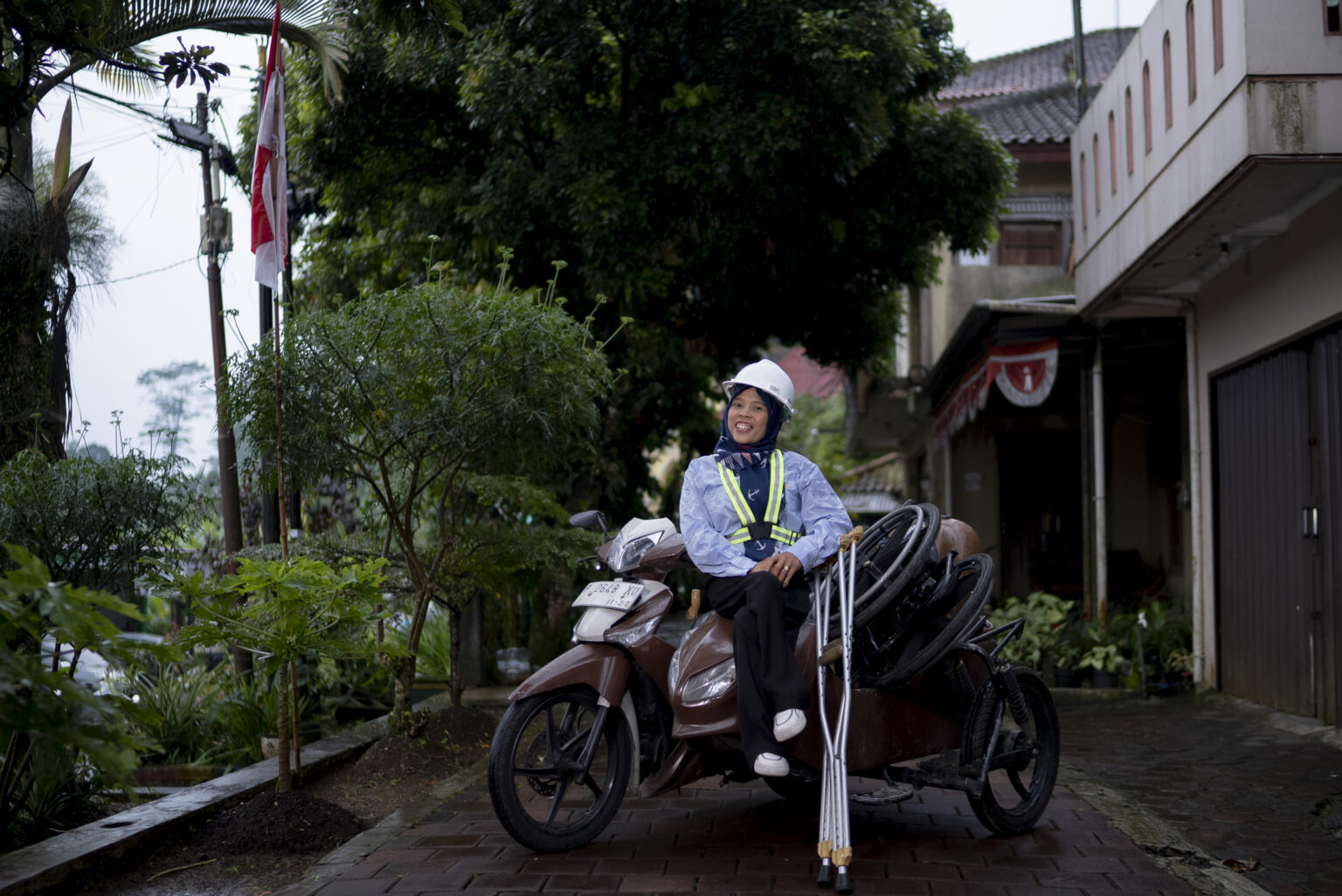
CEO Octalia Stefani says Rezycology’s waste collectors include people with disabilities and women.
“To date, Rezycology has created around 120 inclusive job opportunities in waste management that do not require special skills,” she says.
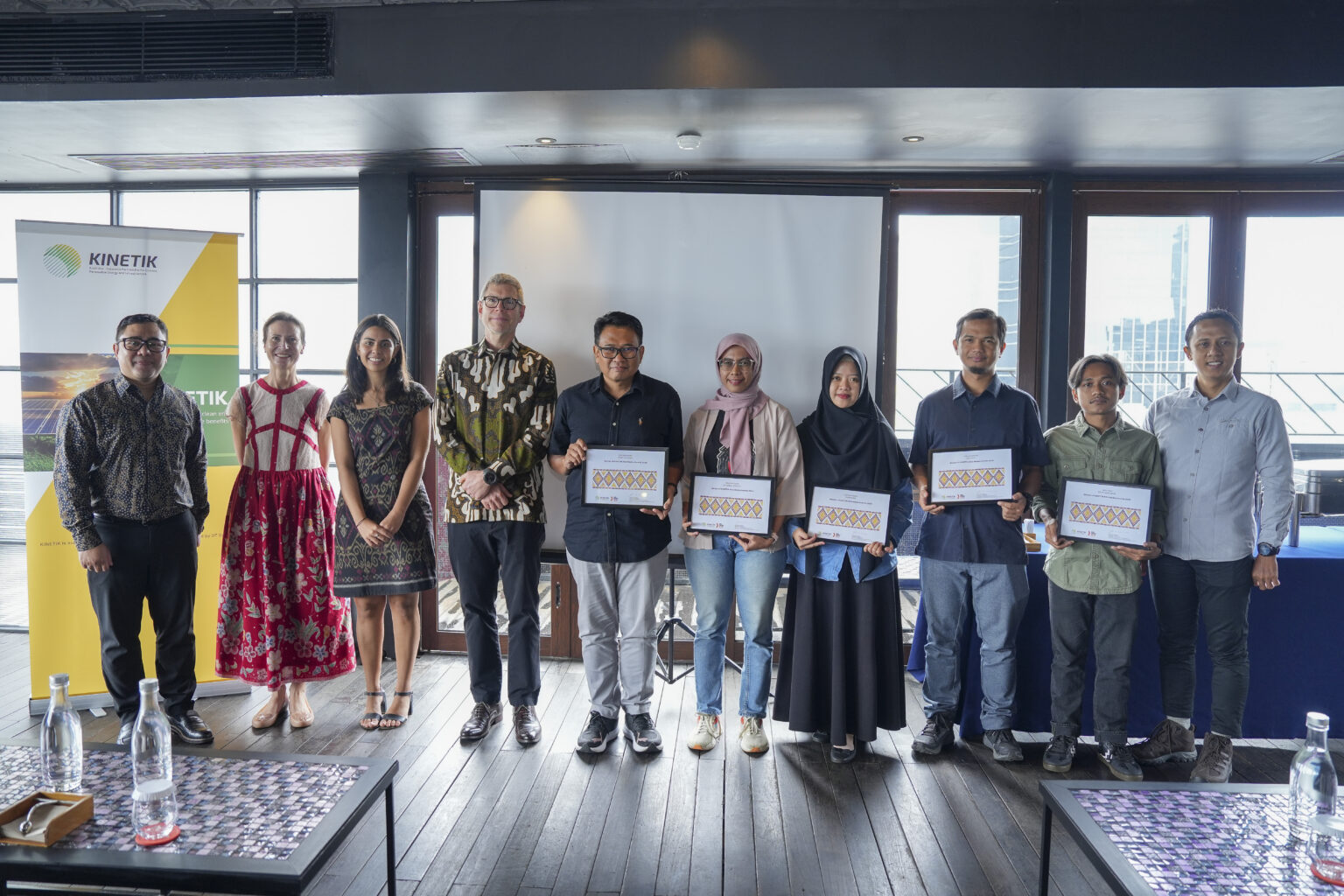
In 2025 Rezycology was one of five Indonesian startups awarded an inaugural KINETIK Sweef Fellowship. The fellowships, which are part of the KINETIK Sweef Entrepreneurs’ Program, provide technical assistance to startups that are led by women or improve the lives of women and people with disabilities.
KINETIK Director John Brownlee says Rezycology is a compelling example of an inclusive climate solution.“As we mark the International Day of Persons with Disabilities on December 3, Rezycology shows how workers with disabilities are strengthening Indonesia’s recycling system,” he says.
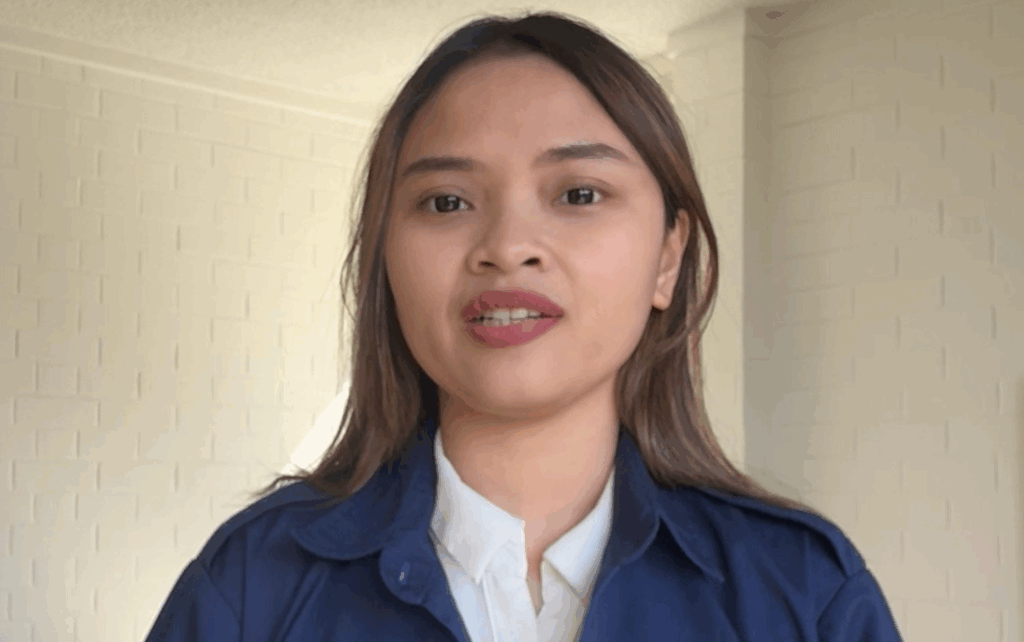
Rezycology CEO Octalia Stefani
Octalia co-founded Rezycology after managing her family’s waste business for five years. “Through that, I learned firsthand how complex and challenging waste management is in Indonesia,” she says.
“I realised that waste pickers and collectors play a crucial role in the recycling chain.”
However she says they faced high job insecurity due to low digital literacy, weak administration and limited data management capacity.
Rezycology helps address this by providing a digital recycling monitoring system.
When waste collectors bring plastic waste to the processing centre, each sack of plastic gets a barcode and is scanned through an app, which tracks every step from sorting to delivery. All the data shows up on one dashboard, so everything can be monitored in real time.

Waste collectors can see how clean the plastic is, adjust prices accordingly and work with suppliers to reduce contamination. “Less contamination means better quality, higher selling prices and greater profits,” Octalia says.
In 2024, Rezycology recycled more than 2400 tonnes of plastic and partnered with three village-owned enterprises in Grobogan and Wirosari in Central Java and Buleleng in Bali.
The social enterprise manages about 350 waste collectors at its seven recycling stations across Java and Bali and partners with a wider network of informal waste pickers who collect plastic from neighbourhoods, markets and public spaces.
KINETIK Sweef’s technical assistance to Rezycology is centred on building a stronger revenue model and evaluating financing options carefully.

“As impact investors, we’ve seen how tough financing terms can put pressure on a business and threaten its long-term sustainability,” says Stefani Vivian from Sweef Capital. “That’s why we guide founders to prioritise steady growth and only accept capital that truly fits their business.”
The KINETIK Sweef Entrepreneurs’ Program is also providing Rezycology with tools to measure its impact.
This means it can show both the plastic it has diverted and the improved livelihoods of waste pickers, especially women and people with disabilities.
Octalia says she has learnt that women’s participation in a company can influence investors.
“This convinced us that building an inclusive workforce – including women and people with disabilities – is not only socially impactful but also enhances our brand and attractiveness to investors.”

At the recycling station in Depok, Doni stands ankle-deep in a sea of plastic water bottles and hoists a giant sack on his shoulder.
The income he receives means he can support his family.
“It helps financially. I can send money home to my parents, even if it’s just a bit,” he says. “It feels good here, like being part of a family.”