Electric Wheel is a Bali-based startup that converts petrol vehicles into electric ones, while also providing electric vehicle repairs and creating custom electric builds.
The startup – which in 2025 was named a KINETIK Sweef Fellow – was founded by Peliatan local I Gusti Ngurah Putra Darmagita and I Gusti Ngurah Erlangga Bayu.
Electric Wheel set up a workshop in Peliatan focused on converting petrol-powered motorbikes to electric ones.
“We want to increase the number of conversions because converting existing bikes means we’re not adding more vehicles to the road,” says Putra, the President Director of Electric Wheel.
The startup also partnered with the village to establish a solar-powered battery charging station.
“A lot of people are still sceptical about electric vehicles – they say it’s no better because the electricity comes from coal,” Putra says. “So we thought ‘Why not create a truly clean charging station powered by solar energy?’”
Five battery companies rent space at the station, which operate using a battery swap system. Motorcyclists drop off their flat battery, swap it for a charged one and continue their trip. The flat battery is then recharged at the station, which takes about three hours.
“I chose to build the solar electric vehicle charger in Peliatan, not just because I am a local and want to support my village, but also because the area has strong solar potential,” Putra says.
The Bali provincial government wants to achieve net zero emissions by 2045, a more ambitious target than the national 2060 commitment. It also wants 140,000 electric motorbikes on the streets by 2026.
However electric motorbike conversions decreased after a national government subsidy program ended in late 2024. The government has said it will reinstate the scheme but in the form of tax relief rather than a direct discount.
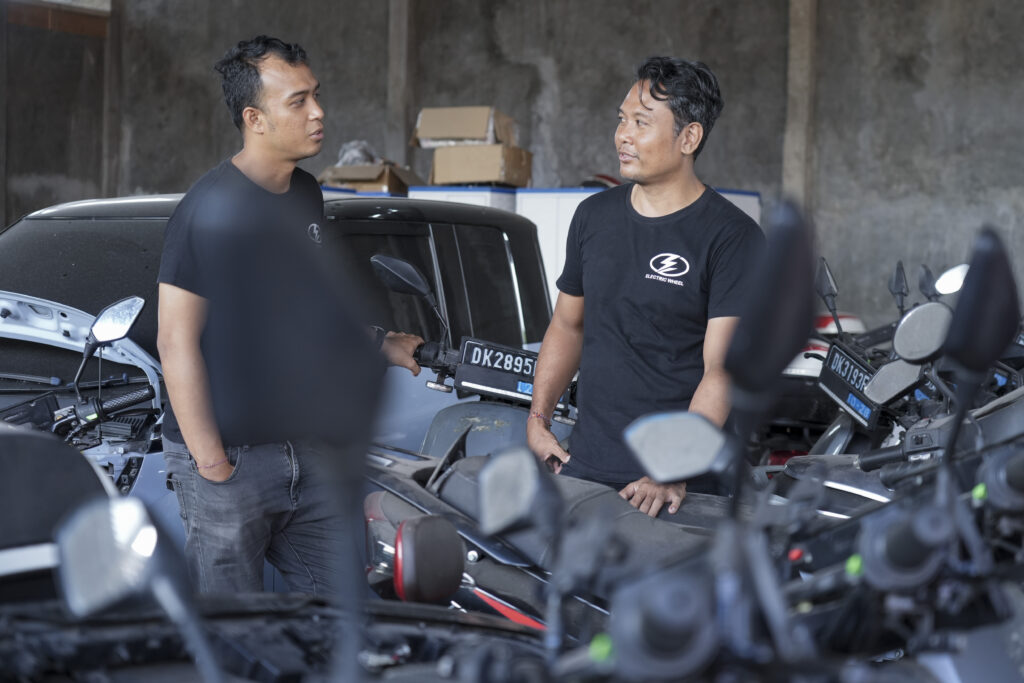
Electric Wheel founders I Gusti Ngurah Putra Darmagita and I Gusti Ngurah Erlangga Bayu. PHOTO: Jefri Tarigan
As a result, Electric Wheel has needed to diversify to avoid a loss of revenue.
“Since we are also a business, we watched the market and saw there’s also a demand for selling factory-made electric bikes and for servicing them. So now we do conversions, sell bikes and run a service centre for EVs,” says Angga.
“We’re determined to keep going, despite the challenges. Our vision is for local Balinese like us to be more than just consumers – we want to be part of this industry.”
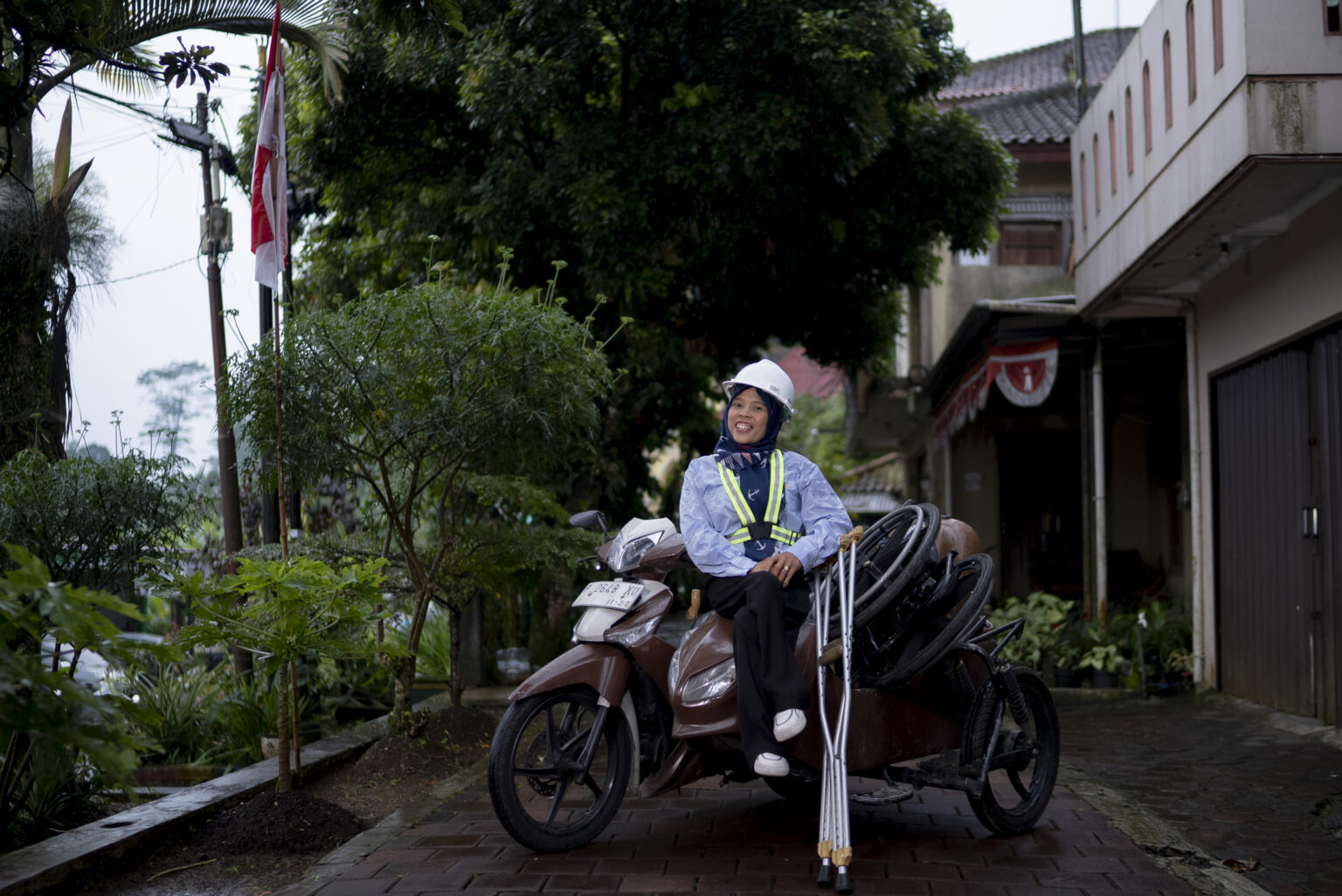
Electric Wheel also modifies vehicles for people with disabilities and can make anything – from bajaj to bemos to tractors – go electric.
As part of the KINETIK Sweef Entrepreneurs’ Program, Electric Wheel received technical assistance to help the startup attract customers and generate new streams of income.
This included exploring workshops – where community members could learn about electric vehicle retrofits, maintenance and safe use – as a new line of business to generate steady income while expanding electric vehicle awareness in local communities.
“We’re helping Electric Wheel draft policies that embed gender inclusion, set up systems to track progress and even helped them build their first website so they can present themselves more professionally to customers and partners,” said Stefani Vivian, Assistant Vice President, Program Investments at Sweef Capital.
Electric Wheel also partners with SMK Penerbangan Cakra Nusantara, a vocational high school in Denpasar, Bali which offers a renewable energy program.
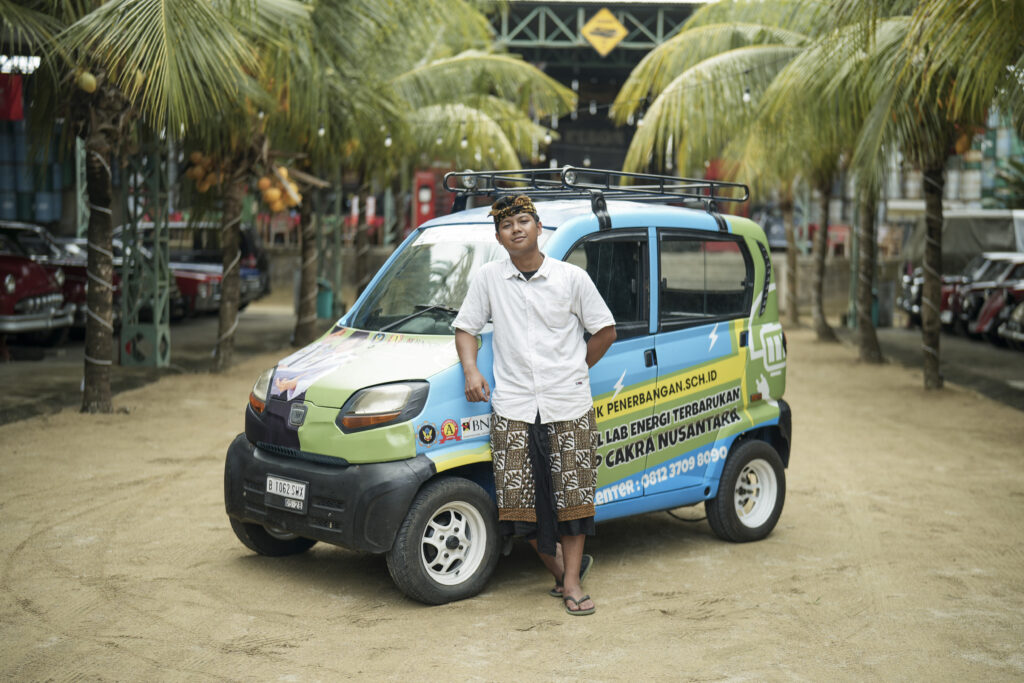
Rafli Geananda, a student at SMK Penerbangan Cakra Nusantara, helped turn this Bajaj electric. PHOTO: Jefri Tarigan
“We help develop the curriculum, sometimes teach classes and host their students for internships,” Angga says.
Rafli Geananda, a student at SMK Penerbangan Cakra Nusantara majoring in renewable energy engineering, helped convert a petrol-powered Bajaj Qute – a compact four-wheel vehicle – into an electric vehicle.
“My task was working on the rear axle. It was custom built by Electric Wheel,” Rafli says.
“Honestly, the whole experience was amazing. I never thought I would be involved in converting a regular petrol car into an electric one – especially since this was the first electric Bajaj Qute in Indonesia.”
Rafli hopes the government will support ideas such as this, so electric vehicle conversion can grow and succeed. “It’s all about zero emissions, after all.”
Meanwhile, back in Peliatan, Electric Wheel is supporting the village’s Electric Motorbike Movement.
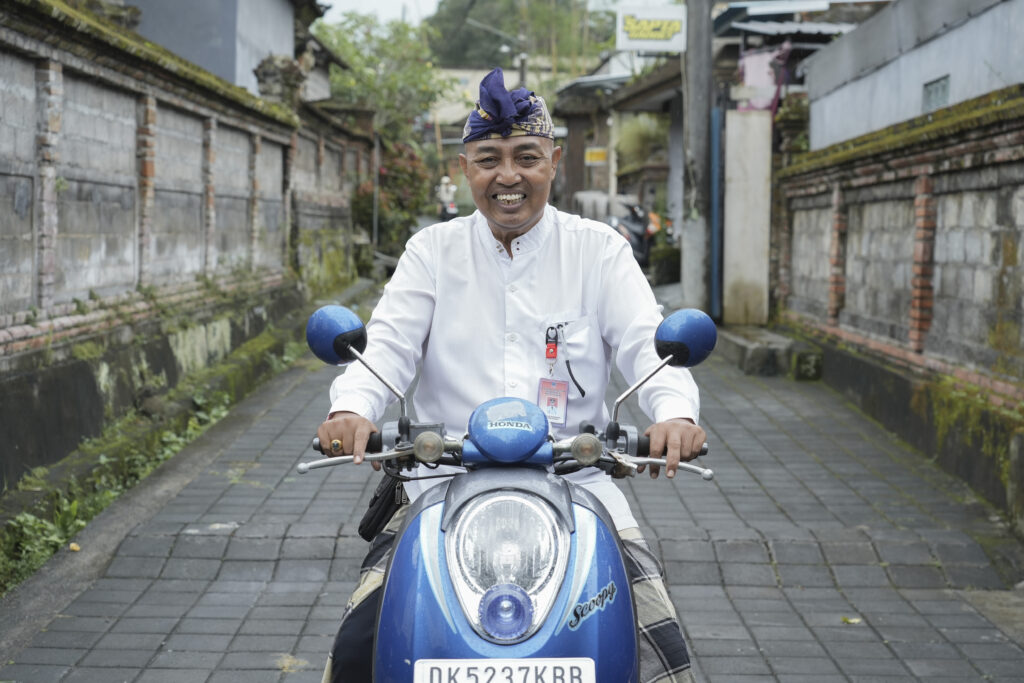
The head of Peliatan Village, I Made Dwi Sutaryantha, would love to see a No Petrol Cars Day in Ubud. PHOTO: Jefri Tarigan
“This may sound like a crazy idea but we have discussed it a lot – even with the Ubud sub-district chief,” says the head of Peliatan Village, I Made Dwi Sutaryantha.
“We want to try a ‘No Petrol Cars Day in Ubud – just electric vehicles. Maybe start with every Friday, then expand to more days or hours. The aim is to familiarise people with electric transport. As village leaders and citizens, we hope to leave a cleaner, healthier and more liveable world for future generations.”