Journalists win KINETIK NEX Media Awards for climate reporting
Feb 12, 2026
5 Min
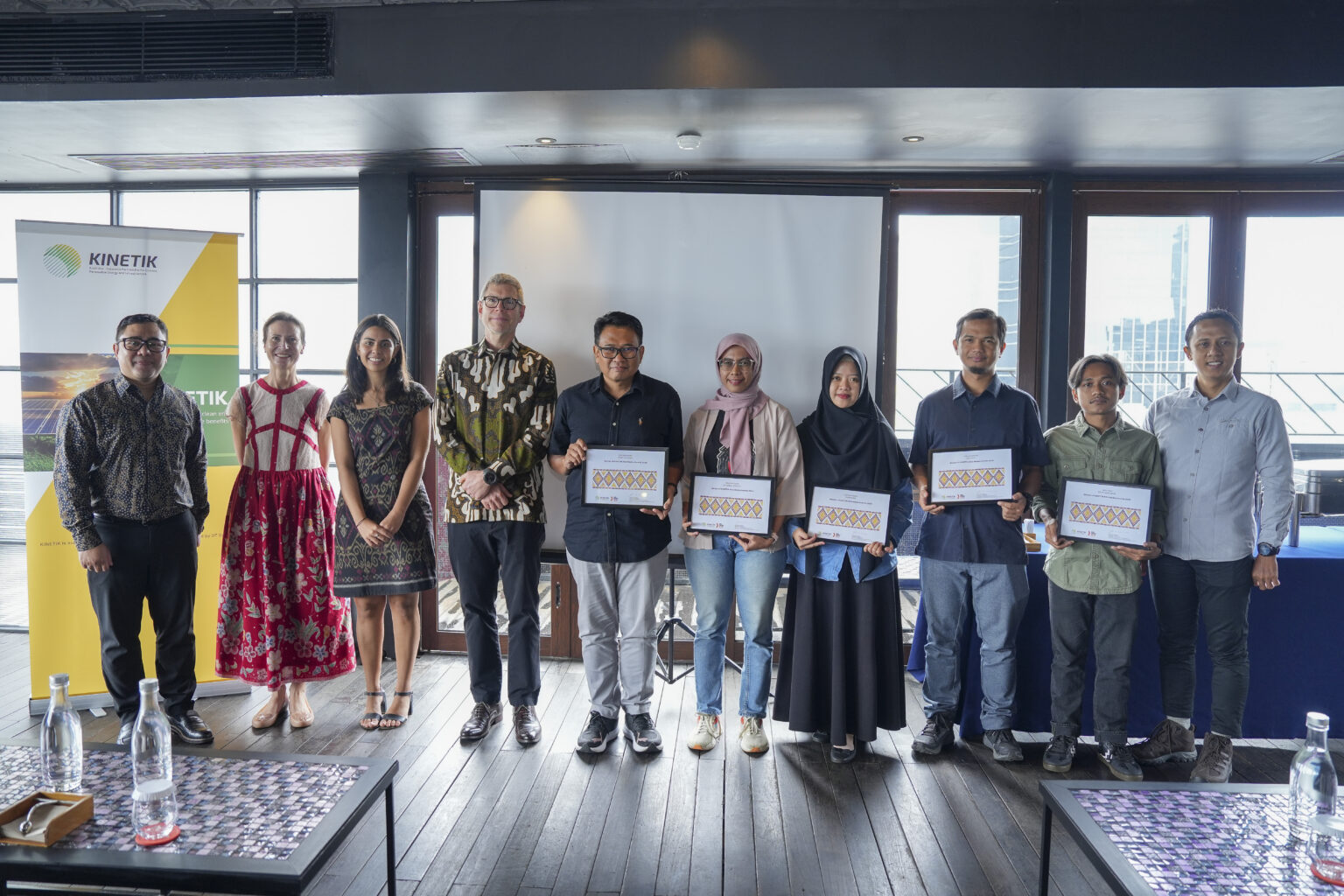
Five journalists from across Indonesia have won KINETIK NEX Media Awards in recognition of their reporting on green entrepreneurship and climate solutions.
The winners, announced on National Press Day on February 9, each received an award and prize money of five million IDR.
The winning journalists are:
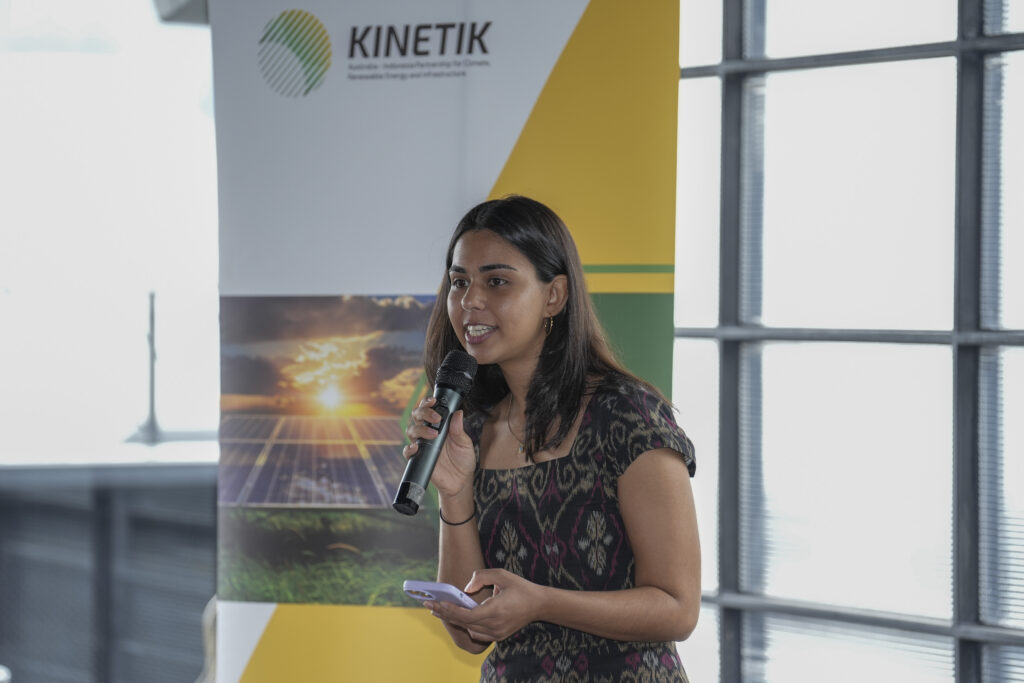
Tahnia Allauddin, Second Secretary Climate and Infrastructure at the Australian Embassy, addressing the KINETIK NEX Media Awards 2026 presentation. Photo: JEFRI TARIGAN
Tahnia Allauddin, Second Secretary Climate and Infrastructure at the Australian Embassy, said she was pleased to celebrate quality journalism that contributed to public awareness of renewable energy, climate action and inclusive economic development.
“These issues are all very close to our hearts in the KINETIK partnership, which is the Australia-Indonesia Climate, Renewable Energy and Infrastructure Partnership,” she said.
“KINETIK is … investing in Indonesian businesses that focus on clean energy and climate change and also supporting earlier stage climate startups that are championing local solutions for the challenges that are brought by climate change.”
The five winning journalists were among 15 selected to participate in KINETIK NEX journalist training, which focused on solutions journalism highlighting the role local climate and energy startups play in Indonesia’s just energy transition.
As part of the program, each of the 15 journalists were paired with a founder from the KINETIK NEX Entrepreneurs’ Program, which provides business incubation to startups in the green economy.
The journalists interviewed the founders about the challenges they faced, their breakthroughs and the community impact of their startups.
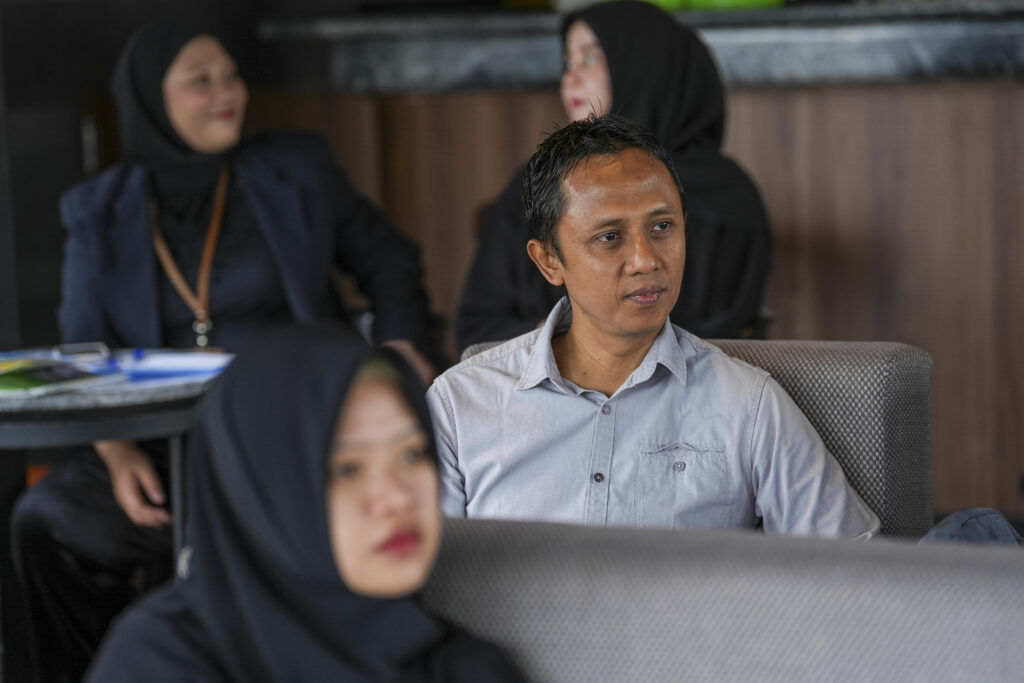
IDN Times journalist and editor Dhana Kencana was one of the judges of the KINETIK NEX Media Awards 2026. Photo: JEFRI TARIGAN
Journalist and editor at IDN Times, Dhana Kencana, one of the competition judges, said the reports were judged on their depth of reporting, clarity and originality of storytelling, relevance, accuracy and use of data and potential impact on public understanding.
“These five best works did more than meet journalistic standards – they found the “soul” behind the technical issues of clean energy and climate,” Dhana said.
“They represent a full spectrum of coverage: from energy access challenges in 3T (frontier, remote and disadvantaged) regions, to biodiversity potential in a tropical nation, to grassroots circular economy practices and to the perseverance and resilience of young innovators.”
Dhana said the five winning journalists had proven that clean energy and climate issues do not have to be boring or elitist.
“In their hands, these issues became stories of hope, poverty solutions, business opportunities and food sovereignty.”
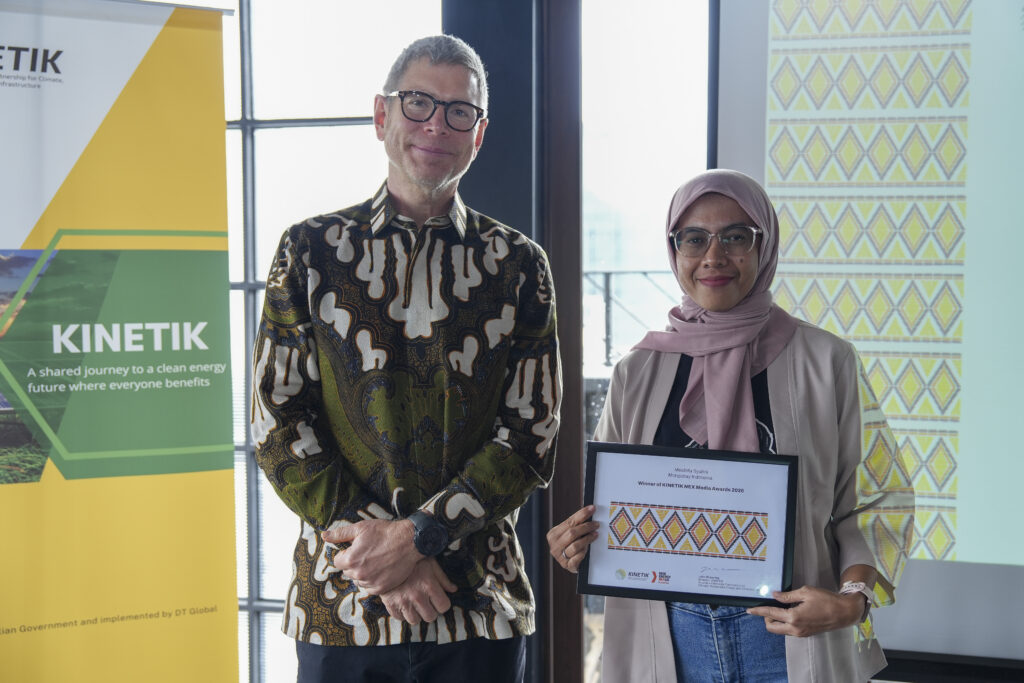
Winning journalist Meidella Syahni from Mongabay Indonesia with KINETIK Director John Brownlee. Photo: JEFRI TARIGAN
One of the winners, Meidella Syahni from Mongabay Indonesia, said she applied to be part of the KINETIK NEX journalism training because she wanted to explore solutions journalism when reporting on environmental issues.
“I’ve been writing since 2017, and most of my stories are filled with recurring environmental problems.”
Meidella profiled Algatech Nusantara, which is experimenting with microalgae to capture carbon.
“They’ve been doing this research since the 1980s, and the potential is enormous – not just for carbon capture, but also for the energy transition, for food and beyond,” Meidella said.
“The challenge is that they haven’t received enough support. Through this article, I really hope more people will read about it and that more people will step up to support them again.”
Another winner, Lilik Darmawan from Media Indonesia, profiled STB Pellet, a startup established by university students in Madiun, East Java during the pandemic.
STB Pellet converts agricultural and industrial waste into biomass pellets that can replace coal.
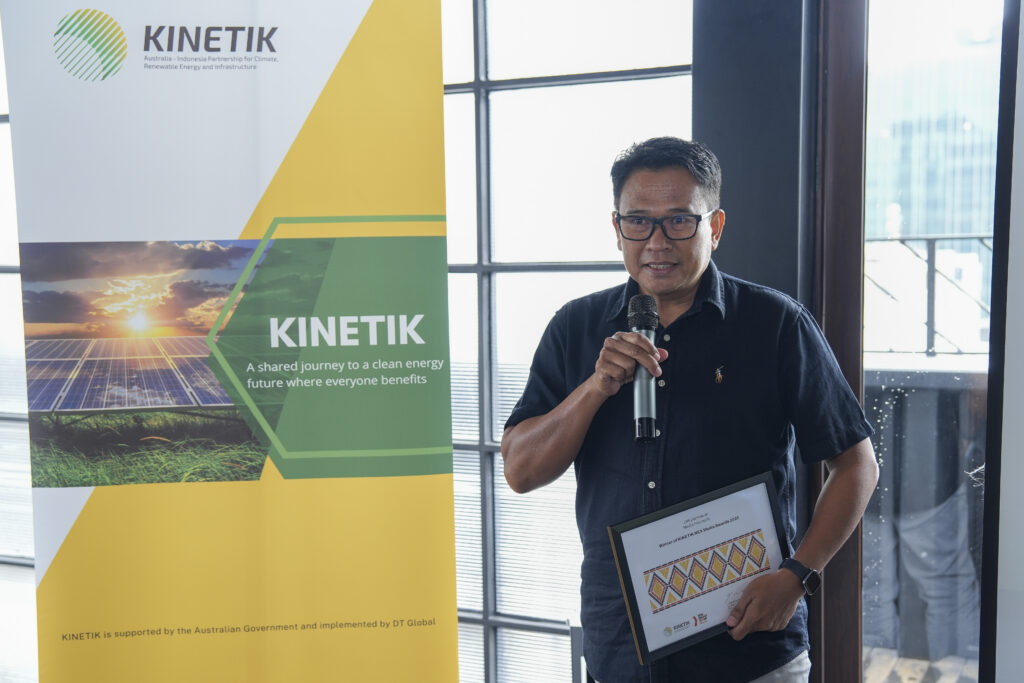
Winning journalist Lilik Darmawan from Media Indonesia was impressed by fresh approach taken by the university students who founded STB Pellets. Photo: JEFRI TARIGAN
Lilik said the university students’ idea was sparked by a fire at a landfill site. “And they asked a very simple but powerful question: if the trash can burn, why can’t it be turned into fuel?”
Lilik was struck by how Generation Z had a different perspective to that of earlier generations.
“So that’s the core of my piece: a youth-driven movement, especially Gen Z, working through a cooperative to add real momentum and new energy to the energy transition by producing STB Pellets.”
KINETIK Director John Brownlee said journalism could help people have a clearer picture of what initiatives to tackle climate change and support a just green transition are all about.
He said stories such as those published by journalists who participated in the KINETIK NEX journalism training showed that despite challenges, positive change was possible.
“Stories like these genuinely show that this is something important,” he said. “That change can happen not just from high level policies and in large businesses but can also grow from the grassroots.”