South Timor Tengah regency recorded more than 60 days without rain in 2025, according to Indonesia’s Meteorology, Climatology and Geophysics Agency (BMKG).
The East Nusa Tenggara Environment and Forestry Agency said East Nusa Tenggara, including South Timor Tengah, was among the regions most affected by climate change, facing prolonged drought, clean water shortages, and increasing risks to agriculture and fisheries.
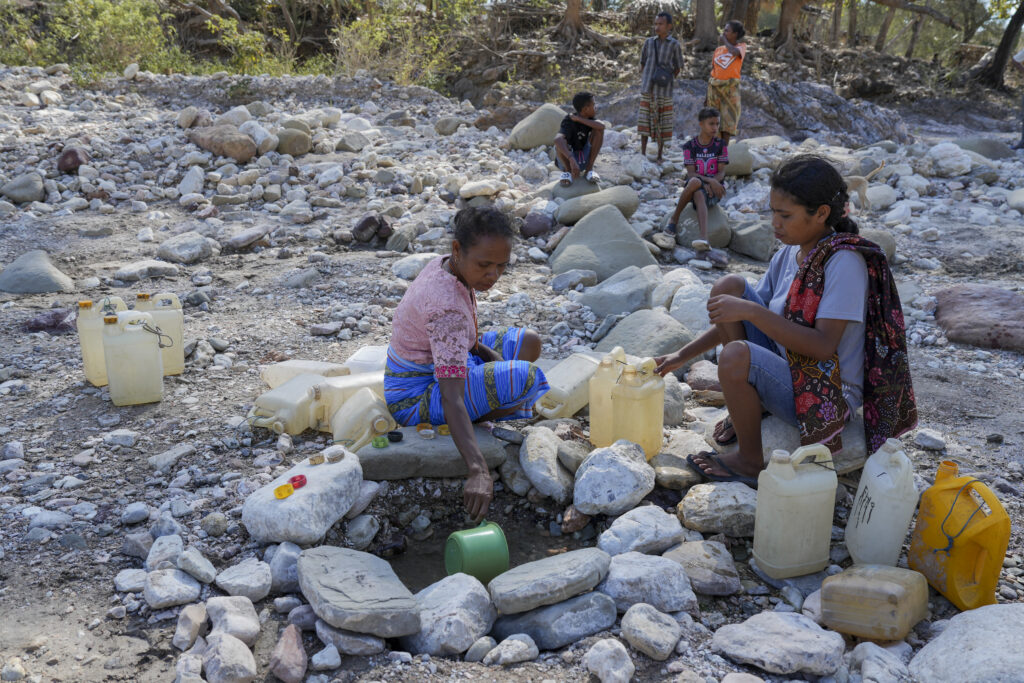
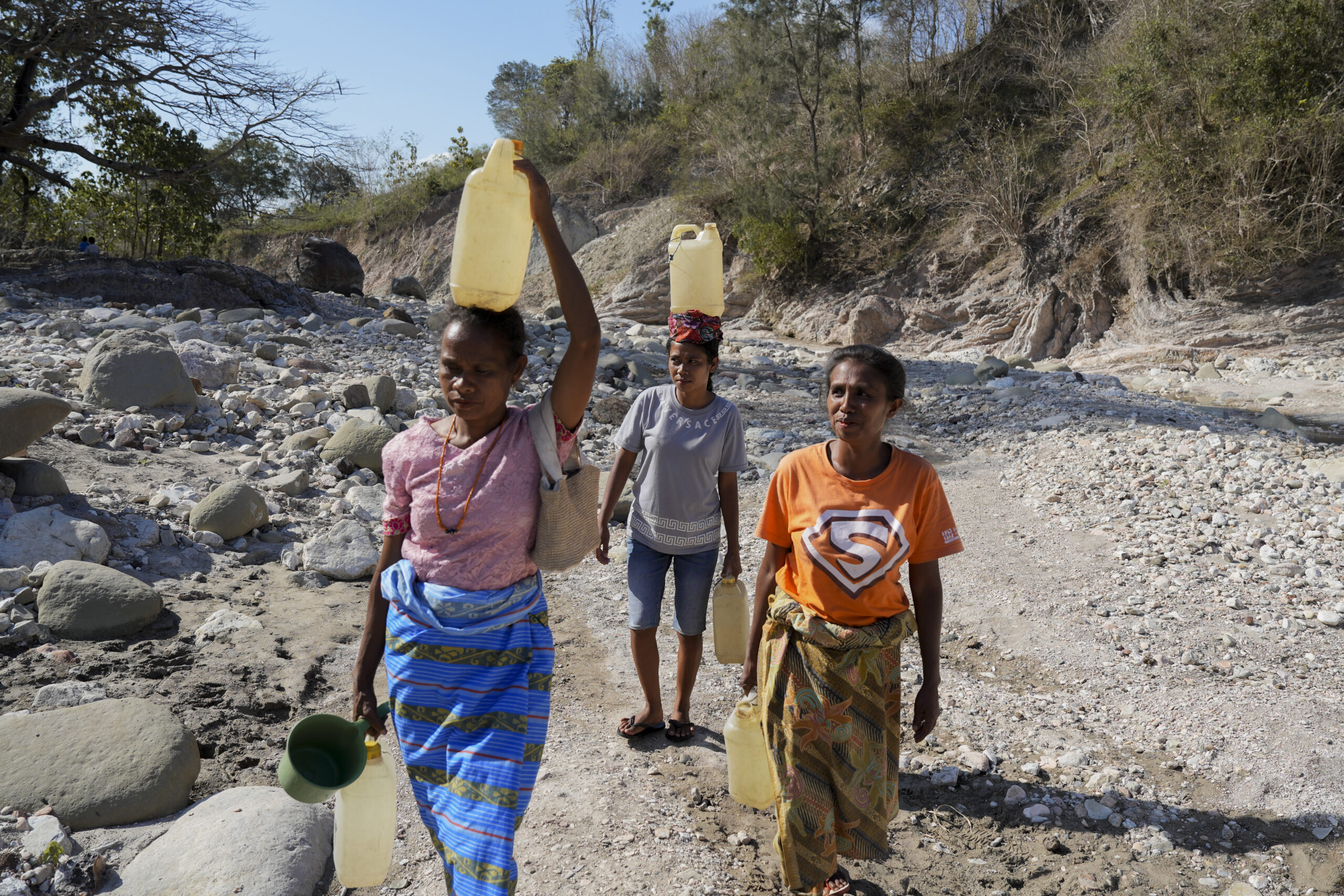
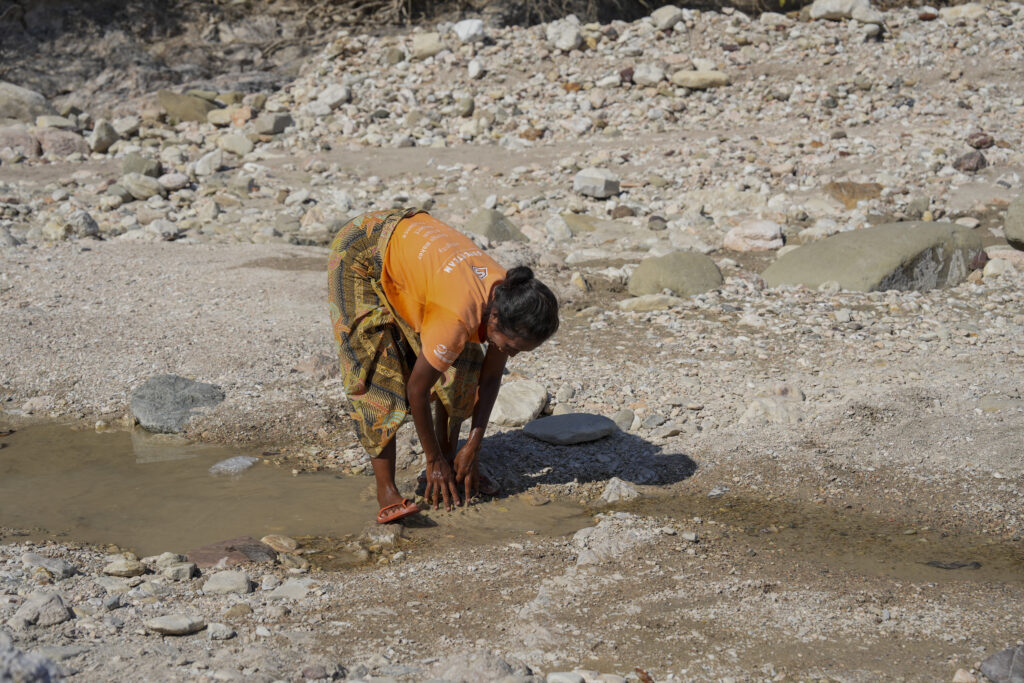
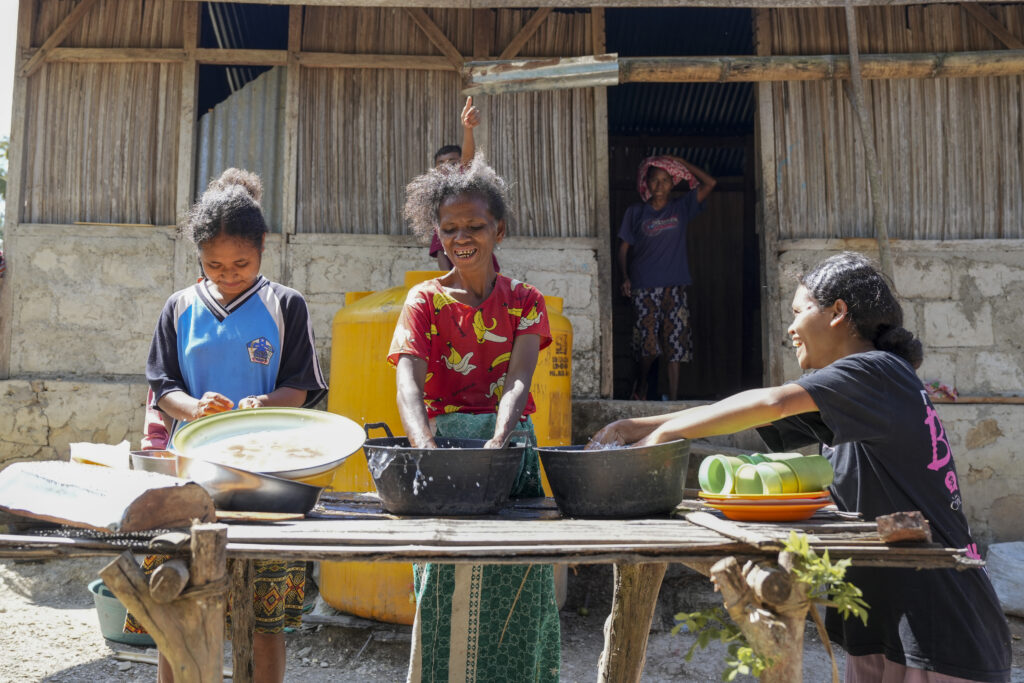
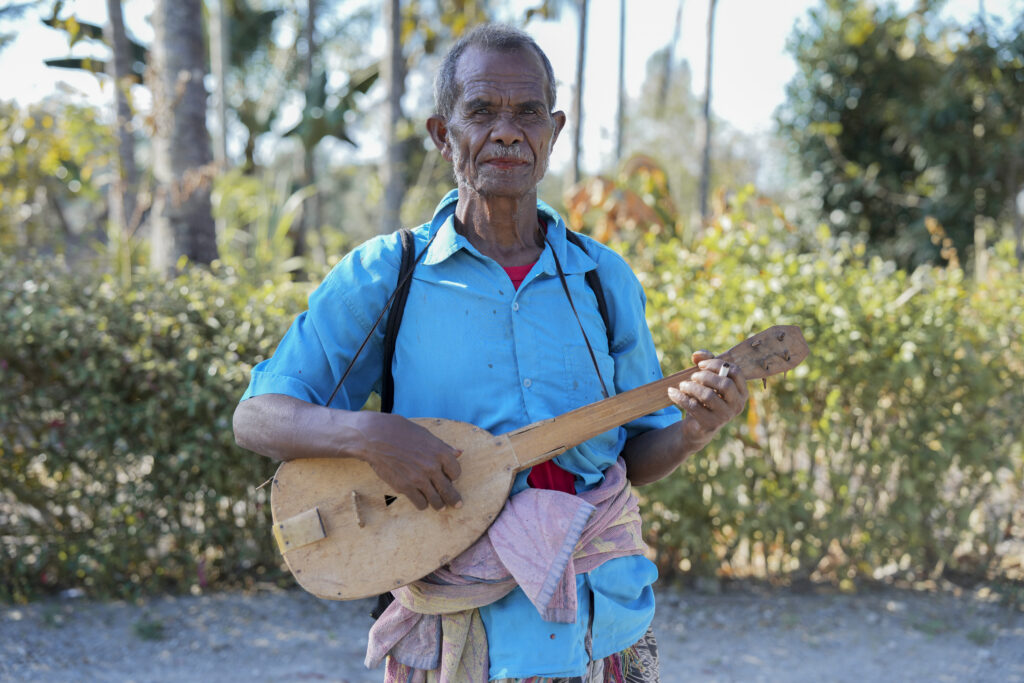
During the dry stretches, women and girls from Bileon walk for hours each day to collect jerrycans of water from the river, which they balance on their heads as well as carry in their hands.
When they are menstruating, it is hard to maintain hygiene, and some girls end up missing school. “It’s uncomfortable to walk so far while bleeding,” says Lucia Tune, 22.
New mothers also face challenges. “When I had my baby, I needed more water to wash clothes and blankets, but I could only carry as much as my body could handle,” says Maria Tofeto, 40, a mother of three.
Turning air into drinking water
The daily struggle for water in Bileon inspired a solution that was literally plucked from thin air.
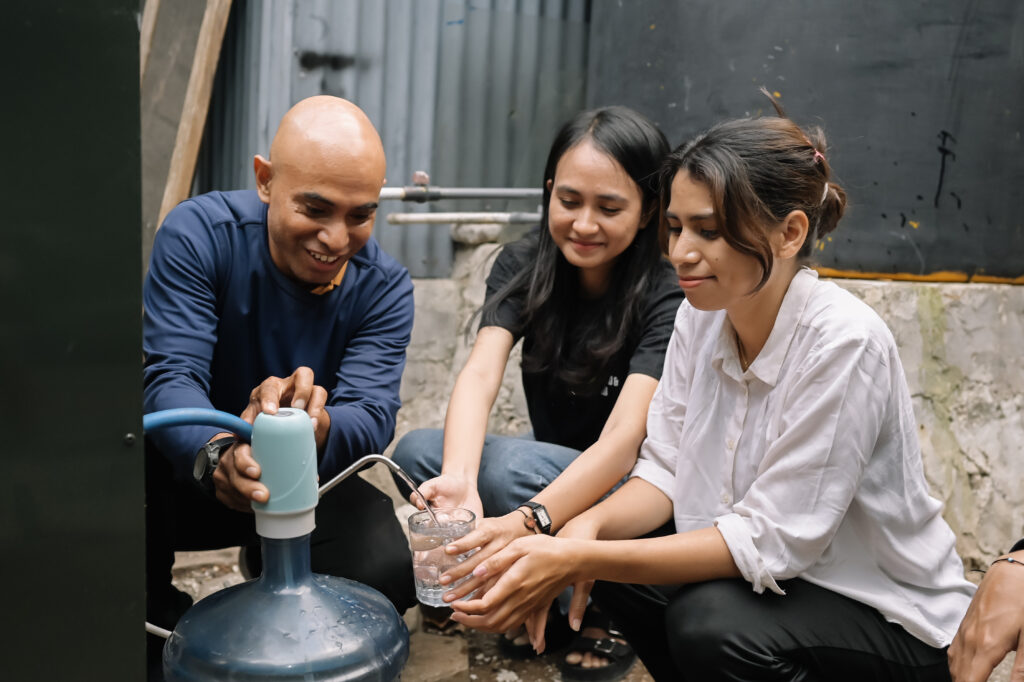
Kuan Timor Technology (Kuantek), a local startup whose name means “Technology from the Timor village”, introduced an atmospheric water generator to the community. The generator condenses humidity from the air, purifies it, and stores it as drinking water.
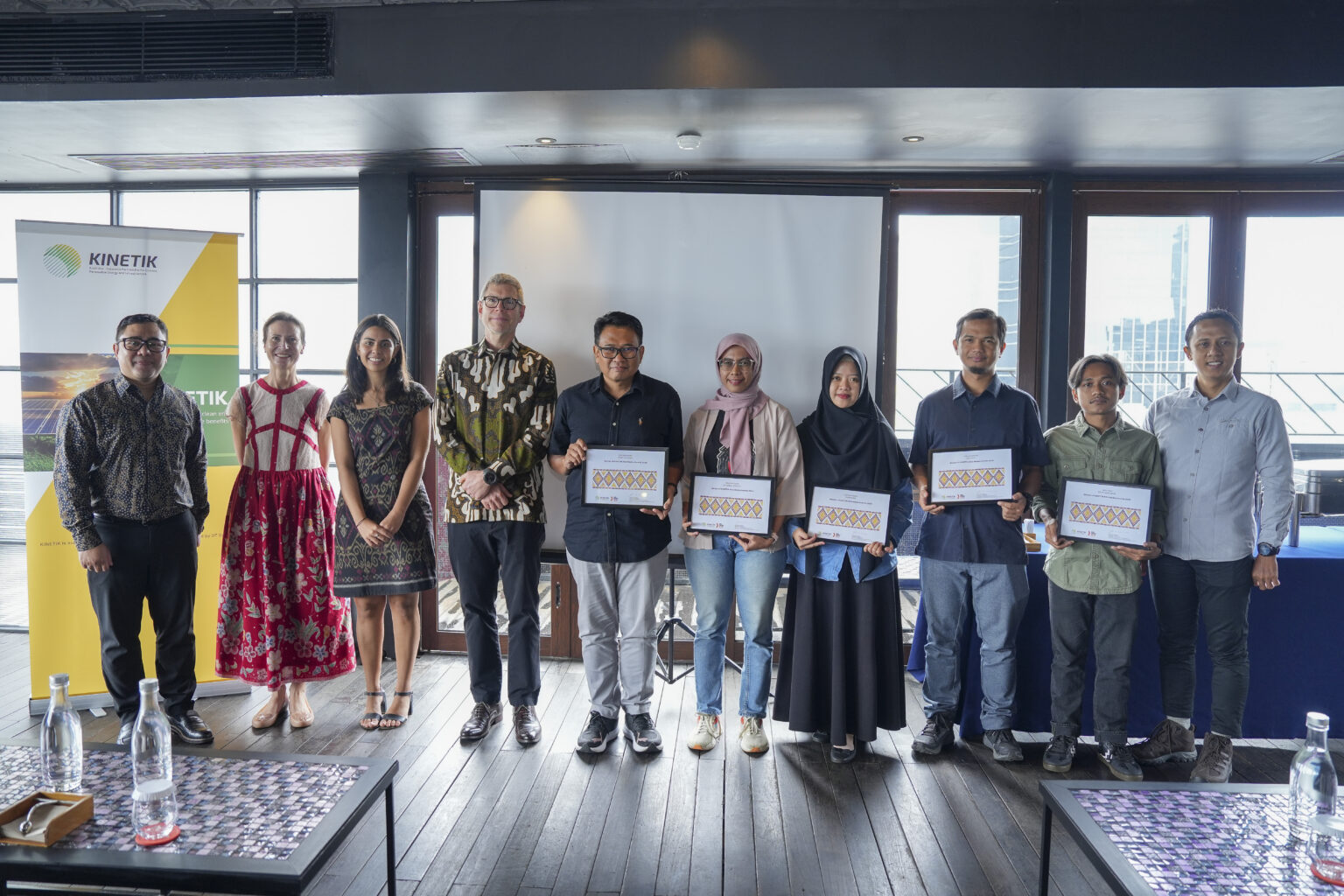
Kuantek is one of 15 innovative climate startups from around Indonesia selected to receive technical support as part of the KINETIK NEX Entrepreneurs’ Program
Initially a collaboration with Plan International, the generator was gradually adapted to suit the local environment and needs.
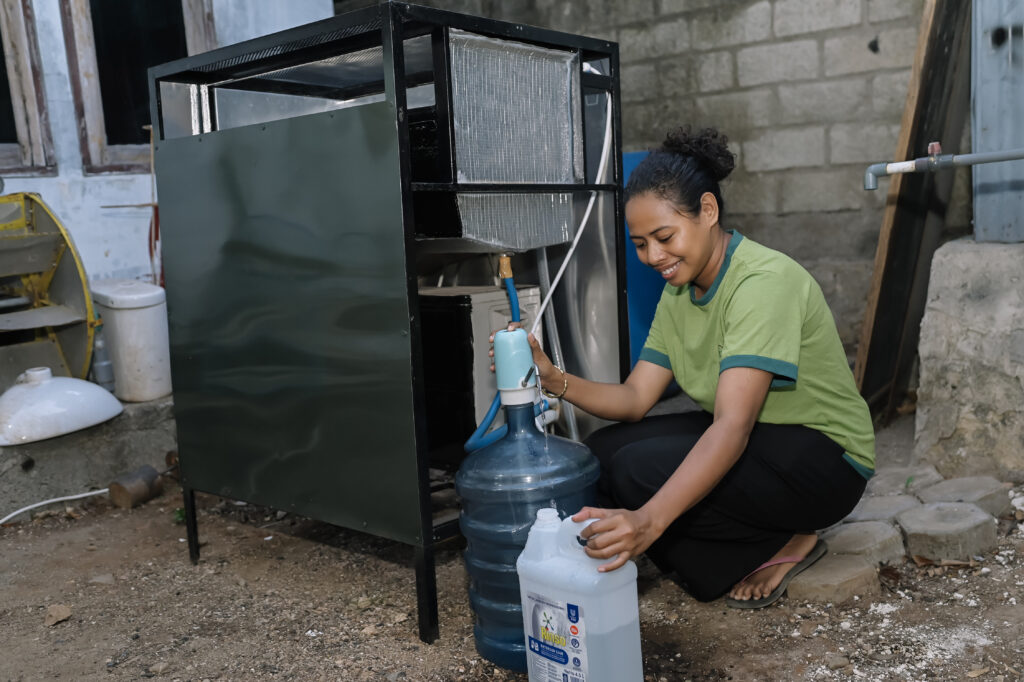
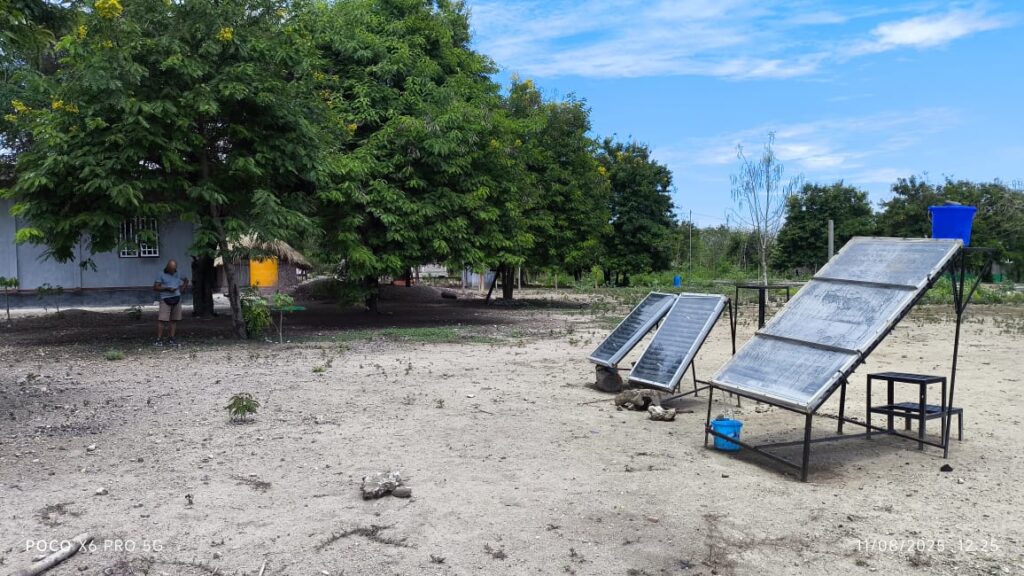
In the villages, the atmospheric water generator is run exclusively by solar power.
“When we work with lower-income or small-island communities, we have to adapt to their economic realities,” says Kuantek co-founder Ben Tarigan.
“On the mainland, people can access the national grid. For remote islands, solar is often the only viable option.”
At peak efficiency, Kuantek’s generator can create around 80 to 100 litres of clean water per day using solar panels that produce roughly 1,700 watts.
When Plan’s project in Bileon wrapped up in 2024, Kuantek partnered with New Energy Nexus Indonesia through the IKEA Foundation-funded Smart Energy Incubation program to expand access to clean water across East Nusa Tenggara.
Building tech that makes sense in Bileon
One of the biggest challenges faced by Kuantek was helping villagers understand the technology.
“Before building anything, we talked with people,” Ben says. “From these conversations, we learned about their practices, habits, traditions, and ways of learning. That helped us design tools that really fit their context.”
Kuantek explained how atmospheric water generators work using analogies such as the condensation that appears under the metal roofs during cool mornings in the highlands.
“Many villagers aren’t familiar with technical equipment,” Ben explains. “So, our first task is to use analogies and everyday examples they already know.”
Kuantek also utilizes readily available materials to construct their machines, including bulbs, metal plates, and frames that any local workshop can replicate.
From doubt to trust
Kuantek faced early scepticism in Bileon over the water produced by the generator.
“We were afraid to drink it,” says Maria. “We are used to getting water from the ground or river. This was something new.”
But when Ben and his team confidently drank from the machine themselves, curiosity replaced doubt.
“That’s when we believed,” Maria says, laughing. “The water tastes good, sweeter than what we usually drink.”
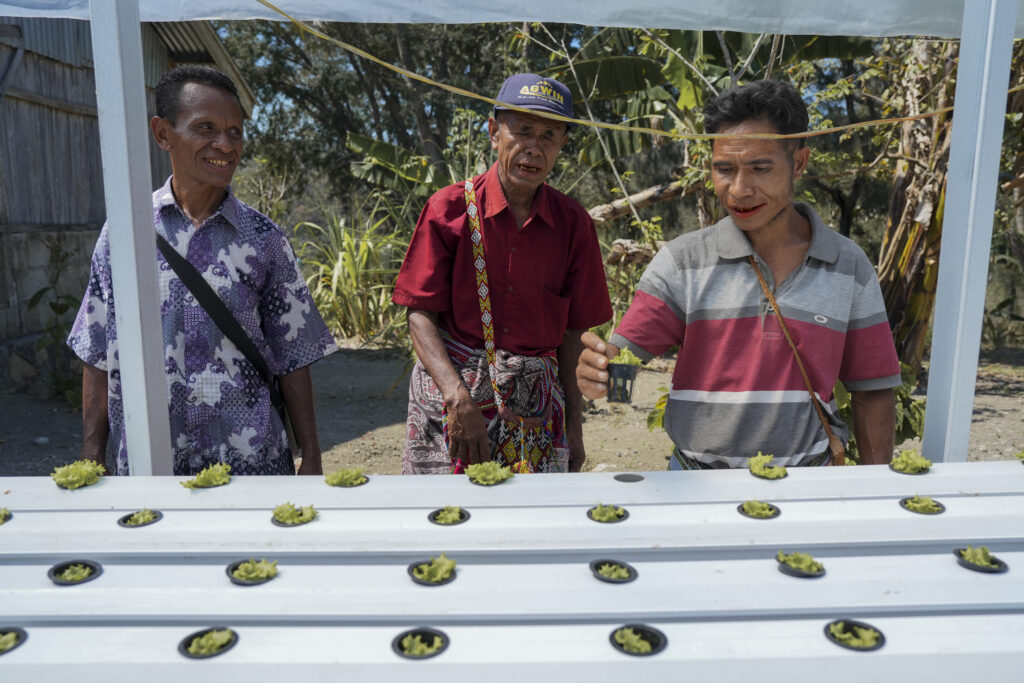
The water from the atmospheric water generator proved ideal for hydroponic vegetables, helping villagers grow more and sell more to neighbouring communities.
The village head is now working with the village-owned enterprises to allocate more land for hydroponics.
The hard part isn’t installation — it’s keeping things running
Talk to anyone working on rural infrastructure long enough, and one challenge will keep coming up: maintenance.
East Nusa Tenggara is full of stories of once-celebrated machines and solar panels from donors that quietly stopped working because nobody knew how or where to fix them.
Ben is painfully aware of this. If a highly paid consultant and a return ticket to Kupang are required every time there is a problem, he sees it as a design failure
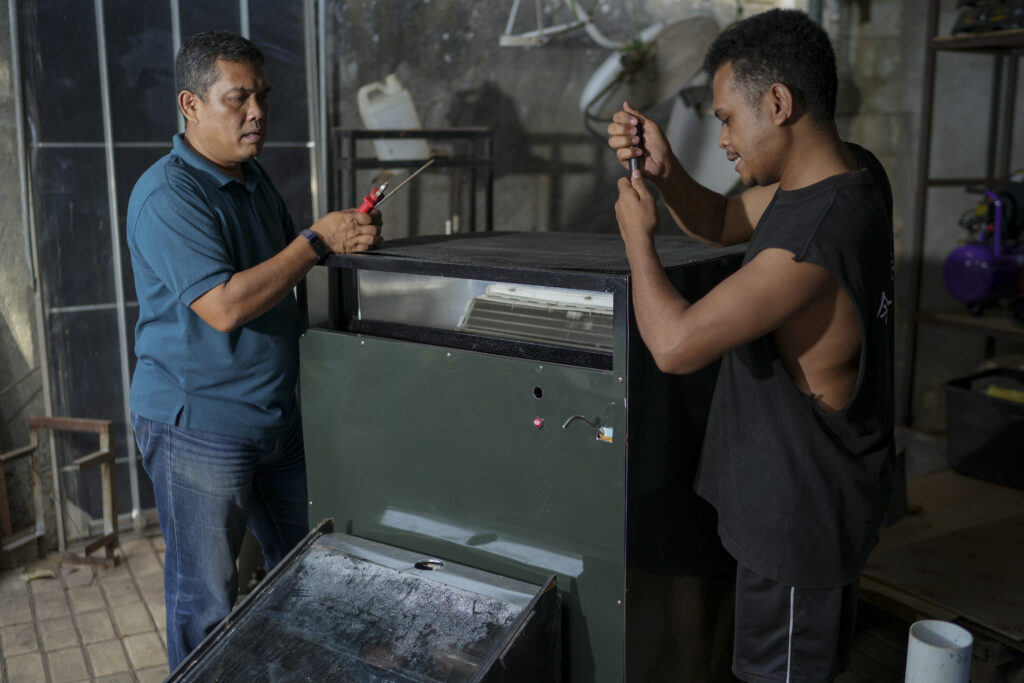
“Since we work on small, remote islands, distance and access are major barriers,” he says. “So, we train local users directly, not just how to operate the machines, but how to maintain them. The goal is that when something breaks, they can handle it themselves without relying too much on us.”
Kuantek doesn’t stop at training; it also maps where spare parts can be bought.
“If someone lives on a small island like Kera near Kupang, we show them exactly which shop in Kupang sells the parts they’ll need,” Ben explains.
Financial model
Although Kuantek has donated atmospheric water generators to demonstration villages such as Bileon, Ben is optimistic that the technology can be monetized.
He says local governments, village-owned enterprises, and churches could all help manage who pays for and who uses the machines.
Ben said the KINETIK NEX Entrepreneurs’ Program had helped Kuantek understand how their work was assisting communities to adapt to climate change.
“We want to grow not just as a business, but in impact, for communities and the environment, especially in high-risk areas.”
He believes donor-funded and government programs focused on coasts and islands should involve local tech players such as Kuantek.
Today, there is only one atmospheric water generator in Bileon. Many hamlets still wait their turn.
“If every hamlet had its own unit,” Lucia says, “girls would not need to walk far, mothers could bathe their babies properly, we could all grow vegetables.”
One machine does not solve everything. But for Bileon, turning air into water is already turning worry into hope.