Across Indonesia, millions of people rely on bottled water as their only safe source of drinking water. But every plastic water bottle comes with an environmental cost, adding to carbon emissions and polluting rivers and oceans.
Lyonda is the CEO and founder of WaterHub, a startup that installs water dispensers in schools, businesses and public areas, providing an affordable alternative to plastic water bottles and expanding access to clean drinking water.
She has used her technical expertise to design filtration systems which transform municipal, rain, groundwater and even seawater into safe drinking water.
“WaterHub machines are designed to treat even highly turbid water,” Lyonda says.
“Our goal is to provide access to sustainable drinking water for all levels of society as well as for businesses, so that sustainable practices can be adopted. We also want to help communities and businesses save costs.”
In 2025 WaterHub was one of five Indonesian startups in the green economy awarded an inaugural KINETIK Sweef Fellowship.
The fellowships, which are part of the KINETIK Sweef Entrepreneurs’ Program, provide technical assistance to startups that are led by women or improve the lives of women.
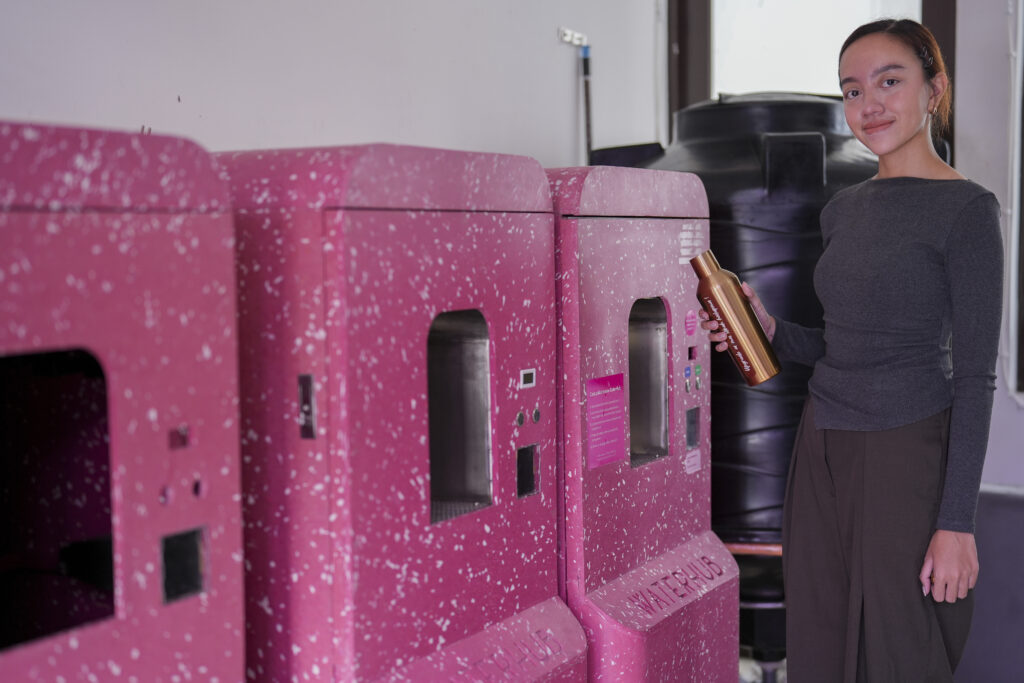
Lyonda Huwaidi, the founder of WaterHub.
Stefani Vivian, Assistant Vice President Program Investments at Sweef Capital, said the support included helping WaterHub to measure its impact and strengthen its leadership and branding so it was ready to expand into new regions.
“With two women among the founders, WaterHub already brings diverse perspectives to problem-solving and leadership,” Stefani said.
“Our job is to help them turn that into a real advantage as they expand.”
Since starting in 2024, WaterHub has rolled out filtration units across Bali, Greater Jakarta, Bandung and Lombok, which can produce between 13,000 and one million litres per day. Customers can choose between pay-per-use and subscription plans.
The startup hopes to have 2000 machines in operation by 2029.
“At the moment, we’re focusing on areas with large populations, businesses such as resorts, hotels, gyms, factories and also public spaces with high foot traffic,” Lyonda says.
WaterHub also collaborates with partners – including bottled water producers – to distribute water at events such as music festivals.
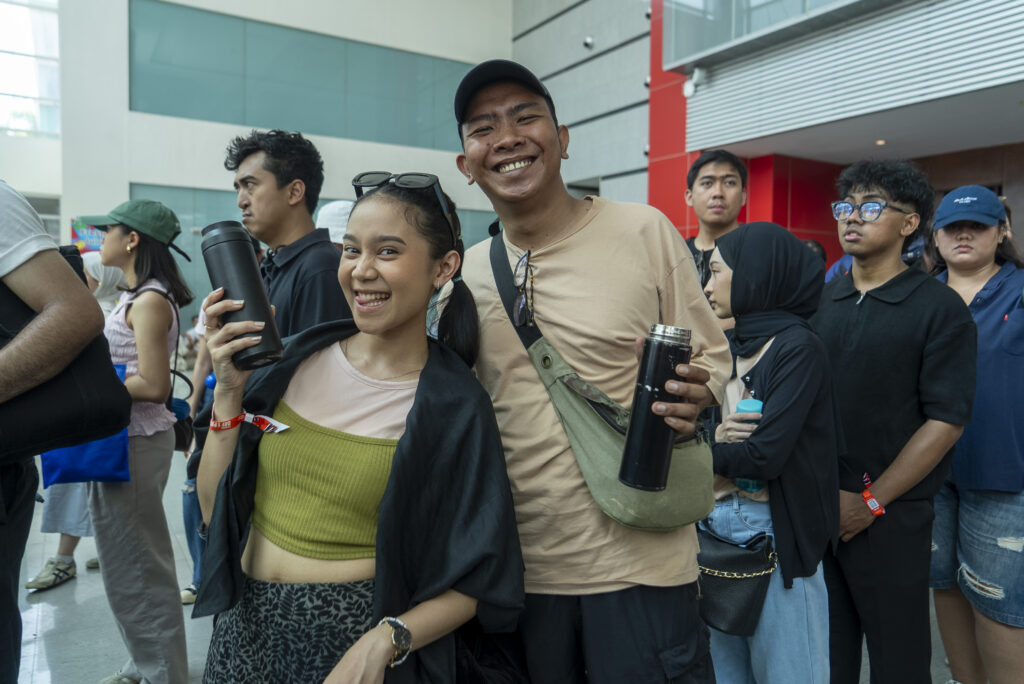
People queue to fill up their water tumblers at Pestapora, one of Jakarta’s biggest music festivals. PHOTO: Jefri Tarigan
In the future WaterHub wants to reach remote areas where communities lack access to clean water. It has installed desalination machines in Lombok and plans to expand to Sumatra.
However, transporting the machines to remote places such as the Gilli Islands can be difficult.
“Once we’re on the island, motorised vehicles aren’t allowed,” Lyonda says. “So the only options are horse-drawn carts. The local community helps transport our machines which for larger units are quite big, so we really rely on community support in remote areas.”
In August, WaterHub received an undisclosed amount in seed funding to expand its operations across Indonesia.
The seed funding round was led by Archipelago VC, a Southeast Asia-focused early-stage impact venture fund, alongside The Radical Fund, which supports entrepreneurs across Southeast Asia.
“This marks more than just Archipelago VC’s first deployment, it reflects our cross-pollination strategy, where portfolio companies collaborate and strengthen each other,” Archipelago VC said on LinkedIn.
“A great example is Robries, our circular design company turning recycled bottle caps into WaterHub’s branded machines, closing the loop on waste and creating tangible impact.”
Lyonda’s ambitions may reach high, but her mission remains grounded on this planet.
“The goal is for WaterHub to be able to install its machines anywhere in Indonesia, so that everyone can access clean water right where they are.”